
Growing as a steward typically requires changing behavior. To become a better investor, you may have to stop doing some things and start doing others.
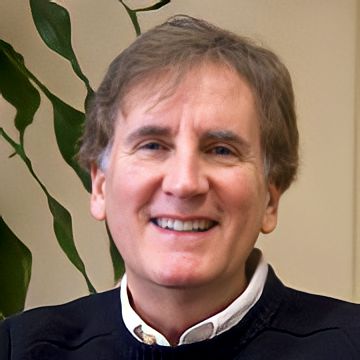
SMI's Mark Biller discussed that with host Rob West on yesterday's Faith & Finance program on American Family Radio.
Mark and Rob also answered caller questions about various investing-related topics.
Click the play button below to listen. Scroll down for the transcript.
Faith & Finance with host Rob West airs weekday mornings on American Family Radio. A different version airs weekday afternoons on Moody Radio.
(More radio appearances by members of the SMI team are posted on our Resources page.)
Transcript
Rob West:
They say that "Winners never quit and quitters never win." But that's not really true, is it? What if you're trying to quit a bad habit?
Hi! I'm Rob West. It's not only okay to quit a bad habit, it's something we should always strive to do, especially with investing. Mark Biller joins us today with a list of bad habits you should quit if you find yourself doing them. And then it's onto your calls and questions at 800-525-7000.
This is Faith & Finance on American Family Radio, biblical wisdom for your financial decisions. (opening music ends)
Well, our friend Mark Biller doesn't have any bad habits — that we can see, at least. He's the executive editor at Sound Mind Investing, an underwriter of this program. And Mark, great to have you back with us.
Mark Biller:
Thanks for inviting me back, Rob.
Rob West:
All right, Mark, you've got a great article at soundmindinvesting.org. It's called Go Ahead, be a Quitter. We'll put a link to it in today's show notes, but I want to unpack it a bit. And why don't you start with this idea of quitting — and explain why that's okay.
Mark Biller:
Sure, Rob. Well, the article is intended to be kind of lighthearted because we tend to think of quitters and quitting as being generally bad. But, like you mentioned, quitting a bad thing is actually a good thing, right? So the trick is really discerning which habits are good and which are bad, and that can be a challenge in the area of investing. So we picked out a half-dozen things that we think are definitely in the bad camp.
And so, to start off that list, if you haven't already, you can immediately quit standing on the sidelines. Albert Einstein allegedly called compound interest the "eighth wonder of the world." And compound interest runs on the fuel of time. So you want all the time you can get on your side.
Of course, you also want to have good returns. And based on the last 100 or so years of history, we know that the best returns have come from owning well-managed, growing businesses. So, for the average person that wants to grow their surplus capital at a rate that's going to be faster than inflation, stocks have historically been the best option. So the first point we made is you want to quit standing on the sidelines and become a part owner of corporate America by buying stocks.
Rob West:
Y'know, when we talk about investing as really "ownership," that's a big idea — and I think something that people often miss. Let's talk about another bad habit we need to quit.
Mark Biller:
Yeah. The second one we listed, Rob, is quit waiting for a low-risk entry point. And the reason for that is it's doubtful that you're going to recognize a low-risk entry point even when one arrives. The problem that we have as investors is our capital risk is lowest when our emotional risk is highest. In other words, when things look terrible and we're scared to death, well, those are actually the best entry points, but nobody wants to invest at those points!
So every day — in contrast to that — every day really offers a low-risk entry if you're committed to at least a five-year holding period.
And so we give the numbers in the article that since World War Two, if you have a diversified stock-fund portfolio, it's lost money only about 5% of the time when you're looking at five-year holding periods. And over 10-year holding periods, it's even more rare to have a loss. Now, on the positive side, about one out of every six of those five-year periods saw gains of 20% or more per year. So quit waiting for a low risk entry point and just get in the game.
Rob West:
All right, what's next?
Mark Biller:
Yeah, the third one is quit looking for a reason to sell. It kind of goes along with the last one. You really need to ignore the constant gloom-and-doom scenarios from all the financial pundits. And that's because even in the best of times, there are always economic and market negatives that can scare you out of investing.
The biggest risk to a person's future financial security usually isn't a near-term bear market. It's actually long-term inflation that eats away at the buying power of their dollars. And like we said, the best way, historically, to beat inflation has been to make a significant long-term commitment to stocks.
Rob West:
Mark, I think what a lot of people miss is that when we look at those average annual returns over the last, let's say 50, 75, 100 years on something like the S&P 500, in large part, the way we get those higher average annual returns is in those years where we had a dramatic upswing. Right? And so even with the down years, the big up years make up for the down and then some. But so often, when we try to "get out" during a market downturn, we miss those big updrafts.
Mark Biller:
Yeah, that's absolutely right. And that's why the counsel against market timing has rung true — for individuals at least, who tend to not do very well with those decisions.
And really, Rob, it's also why so often on our programs together, when people call and ask about annuities, a lot of times — in the annuity language — there'll be caps on how much you can earn in a good year. And what people miss is they see a cap that maybe is 10% or 12%, and that looks like the market's long-term average returns. So you think, "Well, that's not a bad cap." But like you just said, you don't earn those long-term returns by getting 10% every year. You're getting 2% one year and 25% the next. So if every time you have a big year, you're actually cutting that in half, you don't get those long-term compounding returns in some of those products.
So that's one of the reasons that's a little tricky for people to understand sometimes why a lot of professionals, you and I in these programs, often are a little less enthusiastic about those types of products that have those caps in them. They really can kill your long-term compound or at least — I shouldn't say kill it — they just squelch it in those big up years.
Same thing happens coming out of those bear market bottoms. Like you're saying, if you miss the first six months or a year of a new bull market, that can really put a dent in your long-term returns.
Rob West:
Well, and the other piece is, who wants to buy at the top all the time? And the silver lining of that bear market is that we're actually able to buy more shares with less money because stocks are cheaper, right?
Mark Biller:
Yeah, that's right. And what we're really getting at in this conversation, Rob, is that for most people, trying to figure out what's a good time to buy just is the wrong question. And that's why plans like people's workplace retirement plans — their 401(k)s and so forth — can be so valuable as a long-term wealth builder because it turns off a lot of those questions. People set up that "I'm just going to put in X amount every two weeks or every month" and it just builds on autopilot through these market crescendos and crashes and everything in between.
And if you can avoid the temptation to mess around with those allocations and stop your contributions when you're getting scared about the market, that allows these long-term compounding trends to work for you instead of these timing decisions sometimes going against you.
Rob West:
Mark Biller here today, investing expert [and] executive editor at soundmindinvesting.org. We're going to head to the phones here, and we will get to a few more of these things you should quit doing when it comes to your investing in just a moment. If you have a question for Mark today, investing-related topics in play for this portion of the broadcast, 800-525-7000. You can call right now.
Let's go out to Texas. Hi, Theresa, thanks for your call. Go ahead.
Caller:
Yes, my husband and I are retired and we want to biblically invest ± we have for years and kind of had analysis paralysis about doing that. So we have most of our, well pretty much all of our cash in a money market earning just a little bit of interest, but we're trying to figure out how to capitalize on that with more, but we're a little afraid of the market, mutual funds, and again, because of the biblical responsibly investing. So we just wanted to know, is there something that you would recommend? And also, since we're retired, we'd want it to be safe for the most part.
Rob West:
Very good. A couple of questions [then] we'll get Mark's thoughts. How much do you have that's in money market right now?
Caller:
Oh, well, and some of it is in an IRA, too.
Rob West:
Okay.
Caller:
So, total — is that what you're asking?
Rob West:
Yeah, that'd be great.
Caller:
Okay. Probably like 625 [thousand] is what we have.
Rob West:
And the portion that's in the IRA, is that in essentially the cash account as well, or is that invested?
Caller:
Yes. Yep.
Rob West:
It's all in the cash, okay. And then, are you guys pulling anything out on a monthly basis to supplement your income?
Caller:
Yes.
Rob West:
All right. How much are you pulling out?
Caller:
Well, it's sporadic, so probably about $20,000 a year.
Rob West:
All right. Yeah, and that should be very appropriate. I mean, you're under 4% a year that you're pulling out. you've been getting a decent interest rate — those interest rates are headed down. And so I think to the extent you all are in good health, we need this money to last a long time, that your biggest challenge is going to be the erosion of purchasing power through inflation.
So Mark, what are your thoughts for Theresa and her husband?
Mark Biller:
Yeah, Theresa, the biggest thing, if you're moving from money market fund into other investments, we need to first address the asset-allocation decision — how much in stocks, how much in bonds — before we start picking actual investment vehicles. And so the whole process can be kind of involved, and especially if you're wanting the biblical screening, that might be an argument for at least investigating working with an advisor who can do all of these pieces for you — figure out the correct allocation and then also give you some options as far as some good screened investments.
Of course, as Rob always mentions, the Kingdom Advisors website is a great starting place for that, to find somebody in your area if you want to work with somebody. Otherwise, a service like Sound Mind Investing can help you with the first part of that, certainly figuring out what an appropriate portfolio is going to be. And then it would be a question of finding screened investment providers that you like and you like their approach. There are a number of them out there, some of them are sponsors of the FaithFi program, so you could look through that list on the FaithFi website.
So those would be my general steps that I would encourage you to take. Rob, any thoughts on?
Rob West:
Yeah, I would agree with that. And I think even at age 70 — and we didn't talk about your age — there's still a case to have anywhere between 30% and 40% in stocks with the rest in fixed income.
I'd connect with the CKA on our website, Theresa — FaithFi.com. Click "Find a professional." That's FaithFi.com, click find a professional — or soundmindinvesting.org. We'll be right back.
Rob West:
Mark, before the break, we were talking to Theresa, and we were sharing that often, especially when you're on the sideline or just when it's time to invest, having an advisor who can journey alongside you — especially one who shares your values and can bring a biblical worldview of money to the table in the context of competent and wise financial decisions — is really key. And that's why we recommend the Certified Kingdom Advisor designation — more than 1,600 men and women across the country that have earned CKA, the only financial services industry designation for biblically wise financial advice.
And we do have a filter there when you're searching for a list of CKAs in your city if you want only those that have been especially trained and committed to providing faith-based advice if that's important to you.
But Mark, I think for somebody in Theresa's position where they've been in cash, regardless of how they got there — she's got and her husband have a significant sum of money, $625,000 in essentially money market — it can be challenging to get back in because it just feels like such a daunting task. How do you counsel somebody through just the mechanics of that, even the psychological piece of it as well?
Mark Biller:
That's a great question, Rob. And you're exactly right. SMI has been around for 35 years, so we've been through this with a lot of people over a number of really big bear markets. And after, especially the 2000 to 2002 [bear market] and then the 2008 financial crisis, we would hear from individuals for years after those saying, "I went entirely to cash during the bear market." And now it's one year, two years, three, or even five years later, they're coming to us saying, "I've been in cash this whole time and missed this bull market. What do I do now?"
And so this is a real thing people struggle with, whether they're getting invested for the very first time or whether they've been invested and got scared into cash and have been in cash, it's really difficult.
One of the things that we will do — so let me just say first off, Rob, when you're working with a professional, they are probably going to encourage you to invest more of the money more quickly. And the reason for that is all of the research lines up on the side of getting the money invested is almost always better than waiting and putting money to work more slowly.
But I will also add that from the newsletter side of our business, working with individuals for over three decades, that's the emotional hurdle that's so hard for people. And so what we will sometimes recommend for folks through the newsletter, if they're having trouble pulling the trigger and putting money to work in the markets, is simply take the amount of money that you have and break that into pieces. So maybe you break that into four pieces and invest a quarter of that each quarter — every three months — and at the end of a year, you'd be fully invested. Or you can really pick any interval that you want. Maybe you divide that into six pieces and invest one-sixth of that each month for the next six months, whatever feels emotionally comfortable to you.
Again, we're not saying that you're going to get a better financial return from doing it that way, but it's going to be a whole lot easier on you emotionally if you know, okay, on the first of the month for the next six months I'm putting X amount of money into these mutual funds that I've already picked.
Once you turn that into a formula or a recipe like that that "I've decided this is my plan to get reinvested," it's so much more easy emotionally to just follow that plan — because it takes care of all these things that we've been talking about so far in the program. It takes care of, "Wow, we just had an escalation in the Ukraine war last night. Surely I can't put money to work today." Well, if you've already determined, "First of the month. $20,000 goes into this mutual fund," it's a whole lot easier to do it that way.
Rob West:
Oh, it makes so much sense. Thanks for sharing that.
To Alabama. Hi Gary, go ahead.
Caller:
Hi Mr. West, thank you for having me on. I wanted to ask your guest, are you familiar with the "covered call" strategy for portfolio income — buying stock and selling options against it?
Mark Biller:
Yeah, I am familiar with it, Gary. So, it's obviously a more complicated approach than what we generally are talking about on this program, but — for listeners who aren't familiar, we're talking about when you already own a stock, you're actually selling options to generate income against the stock that you already own. And so by doing it that way, you're eliminating some of the risk of that going against you because, worst case, you have the stock that you can use to satisfy the terms of the options that you're selling to generate income.
That strategy has been around for a long time because it tends to work — it tends to be a fairly reasonable conservative strategy if you really understand it and if you're willing to put in the work to keep up with it. I don't really have any negatives to say about that other than it tends to be more advanced and a little more time-consuming for the typical investor.
But if that's something that you like ,Gary, and you're willing to put in the time and effort, I don't have bad things to say about it. Rob, what are your impressions?
Rob West:
Yeah, I would completely agree. I think that's a great explanation, an often misunderstood aspect of investing. [It] does get more complicated, more time-consuming, but I don't have any issues with it either.
Gary, I know we didn't get to a specific question that you perhaps have other than Mark's general thoughts. So stay on the line, and when we come back from the break, we'll let you follow up on what he shared and answer anything you have specific back with more after this stick around.
Rob West:
Before the break, we were talking to Gary. Gary is inquiring about, and I think has some experience in, what are called "covered calls," which is essentially a more sophisticated trading strategy than we typically get into on this program. But it's essentially where an investor sells — or what they call "writes" — a call option on a stock they already own, and that generates income through the option premium while they're limiting the potential upside gain if the stock price rises significantly. But another way to think about it is "renting out your stock," so to speak.
Gary, I know we gave our general thoughts on that, but do you have some experience you want to share or any follow-up questions?
Caller:
I've done it for about 10 years now, and during the last administration, I'll just quickly expound, I gained about 90% on my money over three years. And it was — now, not to say, a disclaimer: don't try this at home. But I had some experience leading into it and how to — it's way better than just buy-and-hold, I figured. And I've been messing with financial mutual funds for a good period of time before I started this covered call business.
You explained it well, and I would just maybe add, you're being paid to own the stock on a month-to-month basis, and like you said, you're renting out the stock. And a little piece to it that I found that no one ever told me, but I just decided to do it this way, buy the stocks that offer up nice dividends. So you're owning the stock, you're getting a dividend, and you're getting a premium to own the stock.
It's a well-rounded — and there's some risk, downside risk for sure. I'm not going to claim that there's not. But if it's a sideways trade — and the market sometimes goes up and sometimes goes down, but overall over 10 years, it goes pretty sideways to a little bit up — and that's what this trade strategy is. It's a little bit up-to-sideways trade strategy, so I've just been successful with it.
Rob West:
Excellent. Well, Gary, we appreciate you sharing your perspective on that. It sounds like you've done well with it. And to Mark's point, we don't have a problem with it necessarily as long as you understand it and you can put in the time, and clearly, you've done that and been rewarded for it.
Mark, any other perspective you might want to share before we move off of this topic?
Mark Biller:
No, I think that's great, Gary. And the big thing, options really — as you would assume from the name "options" — they really do expand your range of things that you can do as an investor. A lot of times that comes with quite a bit of risk with options, they can really get people in trouble.
But one of the things that I really like about the covered call strategy in particular is it's a way to use options without really taking on a lot of the risks that usually are present when someone starts dabbling in options in other ways — the ways people usually just either buy calls or puts. Those approaches, I think, are typically more dangerous for people, especially as they're learning about options, whereas covered calls is a relatively safe version of using options. I like the way Gary described it: You're basically creating an income stream on top of the stocks that you already own, which is a really attractive combination.
Rob West:
All right. We're taking your calls and questions today, but Mark, we're also talking about these "bad habits" that folks need to let go of. We covered several of them. I'd love to hit on a few more. As we talk about "quitting," what else haven't we covered?
Mark Biller:
Yeah, well, a couple more would be, one, we've actually covered quite a bit on this program already: Quit making things needlessly complicated. Most people don't need to read economic forecasts or annual reports of companies or do things like covered call strategies. Not that that's a bad thing to do, but most people don't need to make it that complicated. If they just choose solid investment options and hang onto them for a long period of time, that's usually 90% of the battle for most people.
And then the next one I would add, Rob, is quit obsessing over short-term results. A lot of people would really be better off if they didn't even know what their short-term results are. So, for most people, checking your portfolio every day is not a good idea. It just makes you impatient, produces big emotional swings, and it stimulates a lot of people to trade more often than they should. In other words, checking your results and obsessing over short-term results makes it harder to stay with a long-term plan.
Rob West:
Yeah. All right, what is our final thing that we should quit doing today?
Mark Biller:
Yeah, the last one, Rob, is we really need to quit worrying. And this one comes straight from the Apostle Paul, who tells us, "God has not given us a spirit of fear, but of power and of love and of a sound mind." That's 2 Timothy 1:7.
So we need to honor God, apply his principles, trust in his sufficiency, give generously, and rest in his peace. And hopefully, these things we've been talking about today will help listeners in their journey towards that goal.
Rob West:
Y'know, I think Larry Burkett would often say the fear of loss is the greatest fear that many Christians have, and that fear is a spiritual trap because it leads to taking our eyes off the goodness of God, placing them on our present circumstances, or beginning to trust too much in the things of this world — which we know can be reduced to rubble in an instant. And ultimately, God is our sustainer and provider. He is our hope and he is our abundance and, ultimately, he should be our treasure.
Mark Biller:
Oh, absolutely. And I think that also there's kind of a vague fear sometimes that Christians have, too, of they really want to do the right thing, they want to be good stewards, and they feel like they don't really know how to go about that when it comes to money sometimes. And so that's why people like you and I have devoted ourselves and our careers to trying to help people understand a lot of these kind of basic principles of Christian stewardship and how to manage money from a God-honoring perspective and incorporate biblical wisdom.
Because as we do that, not only do we do better with our money, but we get that huge dividend of peace. When you know that you're doing the best you can and you're doing it with the right motives, it does help take a lot of the angst out of it, the anxiety out of the results that you get because, to some degree, market results, investing results, they're out of our hands. We don't control the markets, but we can control our approach to the markets. And when we're doing that as best we can, the way that the Lord has ordered for it to be done, then we can rest in his peace. And all of those promises in Scripture about the peace of God begin to pay dividends for us in our lives — outside of finances, but also in our financial lives.
Rob West:
Yeah, that's well said. By the way, our team just came out with this beautiful new 21-day devotional called Look at the Sparrows on financial fear and anxiety. It gives you a way to start each day with a piece of Scripture and a short devotional thought, and a prayer and some scripture memorization, just to renew your mind and really refocus yourself away from the fear and anxiety that you have [and toward] God's promises and God being our provider and sustainer. And if you'd like to pick up a copy today, you can go to FaithFi.com/sparrows. Perhaps this would be a great gift for somebody in your life as well.
West Virginia is where we're going next. Janet, thanks for your patience. Go ahead.
Caller:
Hey, good morning. I have a question. My husband worked and he had a 401(k) —the old ones, it was before they come out with the Roth ones, so we were kind of stuck in that one because it was close to retirement. So we didn't really have much chance to start a new one. So anyway, we've got this 401(k), it's in Fidelity right now. It's around $130,000 and we are 66.
And my question is, I know there has to be taxes paid when it comes out. With our age being like it is and you never know when you pass, we want to go ahead and try to move it from that [to a Roth], although we like where it's at because it's grown quite a bit this year, but we need to pay the taxes. That way, should something happen to us, our kids don't have to worry about paying taxes on that money. What do I do?
Rob West:
Yeah, Mark, your thoughts. 66 years old, $130,000. Is this a good time to convert it to a Roth?
Mark Biller:
So one thing I would say about that, Janet, is you don't have to do that in one move, so you don't have to convert that whole amount all at once. And some people would say, well, why wouldn't I just do that? Well, the way the tax brackets work, a lot of times you can actually save a good amount of taxes by doing graduated — or spreading out — a Roth conversion like this over several years.
And what you would want to do is figure out your income for the year and how much room you have left in the current tax bracket that you're paying tax at before your income would bump you up to a higher tax bracket. And you can convert in several pieces that allow you to stay in the lower tax brackets. I know that may sound a little confusing and if you're working with someone on your taxes, they'll know exactly what I'm talking about.
But doing a graduated conversion can lead to paying less tax over time because you're only converting a piece of the IRA each year or a piece of the 401(k) into the Roth IRA each year. And this is one of those "hidden" value adds that a good advisor or like I said, even a good CPA can help you with — A good tax preparer — could help you figure out exactly how much to convert each year to minimize that tax bill.
Rob, any thoughts?
Rob West:
No, I like that a lot. I would say let's make sure we're really thoughtful about the tax implications of this before you do it, and probably not doing that all at one time makes the most sense, but connect with your advisor or certainly your CPA on that. There's a few other aspects of this that I'd like to talk about with Mark after the break, but Janet, thanks for your call today. I hope that was helpful.
Back with our final segment with Mark Biller just after this. Don't go anywhere.
Rob West:
Mark, I want to go back to the conversation we had with Janet a moment ago. I think a lot of folks are in this position. Janet and her husband are sitting on about $130,000 in a traditional IRA, or a traditional 401(k) — I'm not sure if they've rolled it out to an IRA — but thinking about converting it to a Roth. And I'd like to talk about just the decision-making on that with regard to, "Does that make sense?"
We know that the Roth is a very powerful tool, especially when you can get into it early and you've got a lot of time on your side because of that tax-free growth. But here in this season of life where they're in retirement, and especially in light of the election in the last couple of weeks where we perhaps now have a little more clarity about a lower tax environment staying in place at least beyond 2025 when the Trump tax cuts were expected to expire, on top of the fact that you have the qualified charitable distribution opportunity once you're 70 where you can get the money out without paying any tax if it goes straight to ministry — I'm just wondering about whether or not, in this season, it makes sense to stay in the traditional environment.
Mark Biller:
Yeah, those are great points, Rob. And one other one that I would add that really should be at the beginning of any traditional-to-Roth conversion conversation is whether a person has outside funds to pay those taxes with, as opposed to having to take money out of the account to pay the taxes.
That is almost always an immediate flip question for me. If someone has outside money to pay the taxes, well then we can continue the discussion of whether it makes sense to convert. But if you're actually going to be pulling money out of the 401(k) or IRA to pay the taxes, then I really am much less enthusiastic about that.
To your broader point though, Rob, you're right. The tax picture is shifting with the Trump win. It does seem like these lower individual tax rates will be in place longer. That does take some of the urgency out of this decision. A lot of people thought that these tax rates would revert to the higher thresholds of several years ago, before the Trump tax cuts from his first administration. So that is a good thing.
As always, there are a lot of factors, so like you mentioned, the charitable distribution option for someone who is giving regularly to ministry — that is a great way to avoid paying tax out of the IRA down the road by making those distributions straight from the IRA to a charity through what's called the QCD distribution rule.
So, there are a lot of factors there, and that's why, if possible, I love to have somebody work, someone who can run this through some kind of software. We haven't even talked about how converting can actually raise your income in a way that can affect your Medicare premiums. So not to make it even more complicated, but there are just a lot of pieces to think about, which is why it's wonderful if you do have an advisor or an accountant to work with on these decisions. They can really give you some insights that may not be obvious otherwise.
Rob West:
Yeah, you've got to watch out for IRMAA. That's not your long lost relative, that's your "income-related monthly adjustment amount," right?
Mark Biller:
That's right. And some of these things people don't even know to look out for. It catches 'em off guard.
Rob West:
That's well said, Mark. Let's talk about the other end of the spectrum, and then we'll start to tie a bow on this today. What about that person who's younger, maybe they're in their 30s or 40s, a lot of working years still ahead, and they have the option of both the traditional and the Roth.
I know, in months past, you and I have talked about even some research that was done around a formula to determine what percent should go into the Roth versus the traditional if you want to have both accounts working for you — just because of some of the uncertainties around the tax code and other considerations 30 years down the road. How do you help folks determine how to split that money, if that's a good idea at all?
Mark Biller:
Yeah, for young people, I still think that Roth almost always is the way to go. As somebody gets into middle age and their peak earning years, I think it gets a little more muddy, and that's where we actually have some articles on our website that I would refer people to because it's a little more complicated usually than just a real simple rule of thumb.
And then as we're talking about for someone close to retirement or in retirement, then it's much less clear that the Roth is going to be a long-term advantage.
But for young folks, like you asked about, I think that the Roth is pretty safely the clear option for folks in their 20s and 30s certainly. As you get into your 40s and 50s, now we have a little bit more to talk about splitting and the advantages of diversifying your tax picture by having some money in both camps.
Rob West:
Very good. Well, Mark, we always appreciate you stopping by today, sir.
Mark Biller:
Thanks, Rob. It's always a joy to be with you.
Rob West:
That's Mark Biller. He's executive editor at Sound Mind Investing. Again, learn more at soundmindinvesting.org.