

SMI's managing editor Matt Bell joined Faith & Finance host Rob West last week to talk about how money can foster unity in a marriage, rather than division.
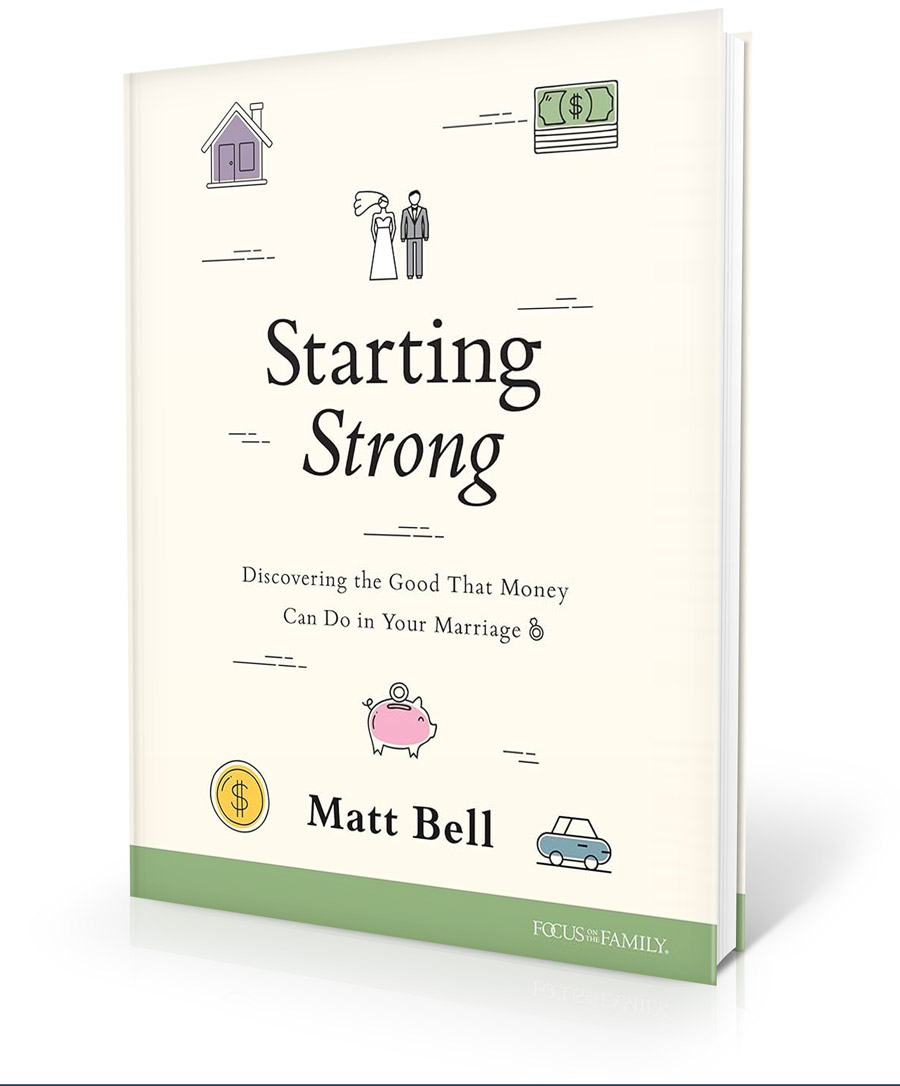
Matt is the author of the new book, Starting Strong: Discovering the Good That Money Can Do in Your Marriage (Focus on the Family, 2026).
To listen, click the play button below. Scroll down to view the transcript.
Faith & Finance airs weekday mornings on American Family Radio. Different versions air on Moody Radio and CSN Radio.
(More radio appearances by members of the SMI team are posted on our Resources page.)
Transcript
Rob West:
Amos 3:3 asks, "Do two walk together, unless they have agreed to meet?"
Hi, I'm Rob West. In context, that verse speaks to Israel's relationship with God, but it also reminds us of a simple truth that applies to marriage. Two people can't walk together unless they're headed in the same direction.
Today, my friend Matt Bell joins us to help couples think about money in ways that strengthen unity rather than create division. And then we'll take your calls at 800-525-7000.
This is Faith & Finance, biblical wisdom for your financial journey. (opening music ends)
Well, it's always a pleasure to welcome Matt Bell back to the program. Matt is the managing editor at Sound Mind Investing, one of our valued underwriters — and he has a brand new book out with Focus on the Family called Starting Strong: Discovering the Good That Money Can Do in Your Marriage. We're excited to talk about it today.
Matt, great to have you back and congrats on the new book.
Matt Bell:
Thanks so much, Rob. It's really great to be back with you.
Rob West:
Let's begin, Matt, with what many couples experience firsthand. Why does money so often become a source of division in marriage when God designed it to be an opportunity for unity?
Matt Bell:
Yeah, a lot of it can be attributed to the fact that couples don't enter marriage as "blank slates." We all bring money-related stuff into our marriage, and that's often very different stuff: different financial circumstances, backgrounds, experiences, hopes, dreams, fears, how we saw our parents deal with money — that's a really big one — temperaments and more.
And it's easy for all those differences to just collide with each other, which can happen in the form of day-to-day money management habits that differ. One's a spender, one's a saver. And especially sometimes when there are really big financial decisions to be made, one wants to stretch and buy as much house as possible, for example, or one wants to play it more conservatively.
And, of course, these things can be resolved, but it often takes time and patience and some intentional conversations.
Rob West:
In Starting Strong, you say that one of the first steps for couples is to "cast a shared vision." Talk about what that looks like practically in everyday life.
Matt Bell:
Yeah, that's right, Rob. Because all the differences we just talked about, it's helpful to find common ground. And I encourage couples to look for that common ground in their shared faith. So the new book opens with several recommended prayers that are all about committing together through prayer that they'll seek in all things, including money — to serve the Lord, to agree that everything belongs to God and they're stewards of all that he's entrusted to them, and to seek unity in their marriage through their financial decision-making.
I know it's really "big picture" stuff, but it's essential to start there because that'll get the marriage headed in the right general direction.
Rob West:
Yeah. One of the clear questions that comes up time and time again on this program that couples have to wrestle with is whether to combine their finances or keep their accounts separate. How do you encourage couples to think through that decision?
Matt Bell:
I strongly recommend joint accounts. Now, as you know, there are some accounts that you can't combine, like IRAs, which after all are individual retirement accounts. But for all the accounts that you can combine — like checking accounts and savings accounts — I strongly recommend joint accounts because they foster transparency and teamwork.
And I'll tell you, Rob, there was a really interesting study on this topic. It was done at Indiana University, a secular school. And their researchers found that when couples combine their finances, it reduces financial fights and increases overall marital happiness. But there was also one really interesting, surprising finding from the study, and that is that couples who combine their finances, they're more likely to do things for their spouse without expecting reciprocity.
Rob West:
Hmm.
Matt Bell:
Yeah, it was surprising. The lead researcher was asked about that because it did stand out from some of the kind of more predictable findings from the study. And she said that when couples combine finances, they tend to have more of what she called a "communal relationship." And that's where partners respond to each other's needs simply because there's a need. They have more of a "we" perspective about their marriage rather than a "that's yours and this is mine" perspective, which impacts all areas of their relationship.
Rob West:
Matt, if somebody is not on the same page with their spouse, they'd like to have everything shared. One spouse just feels like that's a recipe for disaster. How would you encourage that spouse to lean into that conversation?
Matt Bell:
I think it starts back to those big-picture prayers, looking into Scripture, looking into God's Word to see, "What does the Bible teach us about what our marriage is to be about?" And I think that if they really earnestly do that work, and pray together about that, they will see that marriage is designed — God's vision for marriage is oneness, it's unity. And combining finances is a step that'll really help foster that.
Rob West:
You encourage couples to have regular money meetings. So let's get practical for a moment. How often should those happen and what should couples make sure to cover?
Matt Bell:
Yeah, communication is huge in all areas of marriage, of course, but certainly when it comes to money. So initially, I recommend that couples spend as much time as it takes to develop a cash-flow plan — because that'll guide their use of money throughout their marriage. That can take some time initially and probably multiple conversations. But once it's up and running, I would carve out then 60 minutes at the end of each month to look at how things went and what might need to change going forward. Over time, those meetings will take less time.
But here's an important point. This isn't just about an end-of-the-month conversation. It's about ongoing communication. And once you have a cash-flow plan established, it's important for both spouses to "manage to the numbers" in the plan. I like that phrase, "manage to the numbers." That means not waiting until the end of the month to see what happened, but actively using their cash-flow plan to make things happen, to spend money intentionally.
So, for example, before you go to the grocery store or a clothing store, you're checking to see how you're doing in your clothing or grocery budgets this month. And that information is guiding your decisions in those stores so that you're managing money intentionally. That way you won't get to the end of the month and be completely surprised at how things went.
Rob West:
Yeah, I think having that regular rhythm is really key.
Now, debt can almost feel like an unwelcome third party in a marriage, Matt. How can couples face that both honestly, but also work through it together?
Matt Bell:
It's a really, really big factor. One researcher that I read, [in] his work he said that debt is a "cancer" on marriage. It can create just a lot of stress, and couples with debt as they enter their marriage, they tend to spend less time together. I don't know if that's because they're working extra jobs or what that is, but it's just a real negative factor in marriage.
So if a couple is starting their marriage with any debt other than a reasonable mortgage, I strongly, strongly encourage them to make it a high priority to get out from under that debt sooner than later. Even if that means putting off buying a house, even if that means spending less on vacations or cars or whatever else than your friends are spending.
If a couple gets out of debt early in their marriage and stays out of debt other than a reasonable mortgage, that will be so incredibly good for their marriage.
Rob West:
I couldn't agree more. Now, a moment ago you mentioned a cashflow plan and the importance of it. And you make the point that it's really not about restriction, but direction. I'd love for you to talk about that a bit.
Matt Bell:
Sure. So a lot of people think of a budget as being about less, less spending, les freedom, less fun. But a budget, or as you said, I prefer to call it a cashflow plan, is actually about more. It's about having more knowledge about what's happening with your finances so you can be more intentional in managing those resources. So you end up having more for the things that really matter to you. So if people listening to this have never used a cashflow plan before, you may have to take that on faith. It'll take a little getting used to, but soon enough, you'll wonder how you ever lived without it.
Rob West:
Yeah, that's right. I love that you focus an entire chapter on generosity. Let's talk about giving and how that can really help to foster unity and bring the couple closer together.
Matt Bell:
Sure. Giving changes the focus from us to God and from us to others. The Bible says that "where our treasure is, there our heart will be also." And there's such joy in living generously. As a minister I know I likes to say, when something amazing, something miraculous happens through our church or another ministry that we support, "We didn't cause that to happen, but we got to be a part of that" — and there is such great joy in that.
Rob West:
Perhaps we can bring that to life through a story, Matt. Can you share a real-life story of a couple who really practiced what you just described and how that then affected their marriage?
Matt Bell:
Absolutely. One of my favorite couples that I've ever interviewed for any of the writing I've done is Scott and Karen. When they got married, Karen brought $50,000 of non-mortgage debt into their marriage. And Scott had a great sense of humor about it. He called it a "reverse dowry," which I love.
Rob West:
I love that.
Matt Bell:
But from their very first days as husband and wife, they were truly in it together. Karen would often express regret about what she kept calling "my debt."
"My debt is keeping us from doing this or that." But Scott, from the earliest days, would correct her and say, "It's our debt." I just love that they were truly in it together. So they were committed to getting out of debt together.
And at the same time, they felt compelled to live generously despite that debt. So as they kept sending these big checks to creditors each month, they also gave at least 10% of their income. And I love this, the phrase they used at that time was "10% of net until we're out of debt." And then they changed it to 10% of gross.
Rob West:
That's great.
Matt Bell:
So they were just very convicted, very just motivated to honor God with the first fruits, with the first portion of all that he blessed them with, no matter what. It took them a long time to get out of debt, about seven years. And during that time, there were many days when they wished that they had the resources to buy a home, but they were committed to getting out of debt and committed to living generously.
And when they finally got out of debt, when they looked back, they could clearly see God's purposes for all that happened. Karen said it took that time for God to mold her heart and to change some of her attitudes about money. And as they looked back in a real practical sense, they saw that if they had been able to buy a house on their schedule, it would've been what turned out to be a peak in the housing market.
Rob West:
Well, I can hear even in that story that they really are taking a team approach. I mean, even though it's not something fun to think about, it sounds like it was really kind of a tongue-in-cheek approach that they had, which really I think just gives a picture of the unity that they were driving toward. Is that right?
Matt Bell:
Absolutely. And I think it fostered that unity. It just bound them together in this shared mission to get out of debt. Scott wasn't blaming Karen for the debt. He wasn't upset about the debt.
I mean, sure, he'd rather enter marriage without debt, but he loved her and wanted to make sure that she didn't feel guilty about the debt she brought into it — wanted to make her feel and see very clearly that they were in this thing together.
Rob West:
That's a beautiful picture.
Matt, we have just about a minute left. For somebody listening right now that just feels stuck, where would they go next?
Matt Bell:
I would find time when emotions are under control — usually there's a particular issue, oftentimes it's debt. And so find a time when emotions are low and they can truly listen to each other.
Deal in facts, not assumptions. I find that often couples are having disagreements when they're not really dealing with the facts, which is why having a cash-flow plan is so helpful.
Pray together for sure. Keep God at the center of their marriage and their marriage relationship valued much more important than their financial situations.
And if they need help, I mean, there are many churches that have stewardship ministries that would love to come alongside them to encourage them and help them in practical ways with financial coaches. They may even want to avail themselves of a marriage counselor.
But through it all, keep that big picture in mind. Keep your focus on honoring God with your finances and keeping your marriage strong.
Rob West:
Matt, this has been so helpful and encouraging. So thankful for you, my friend. Thanks for stopping by today.
Matt Bell:
It's my pleasure, Rob.
Rob West:
That's Matt Bell, managing editor at Sound Mind Investing. All right, folks, you've got to go get it. The book is called Starting Strong: Discovering the Good That Money Can Do in Your Marriage. Buy it wherever you buy books — and check out soundmindinvesting.org as well. Sound Mind Investing has been a long-time partner and underwriter of ours here at Faith & Finance.
Your calls are next: 800-525-7000. This is Faith & Finance — biblical wisdom for your financial journey. We'll be right back.