
Younger investors are reshaping the stock market, driven by a "gamified" approach to investing that favors high-risk speculation over traditional, long-term wealth accumulation.
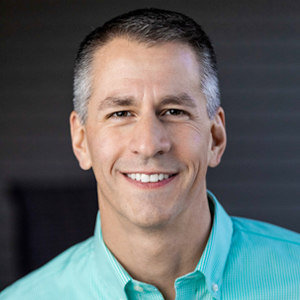
SMI's Mark Biller talked with host Rob West about what's happening and why on American Family Radio's Faith & Finance program.
Mark and Rob also answered listener questions about managing an inheritance, making Roth IRA conversions, and investing in the Thrift Savings Plan for federal employees.
To listen, click the play button below. Scroll down to see the transcript.
Faith & Finance (formerly MoneyWise) airs weekday mornings on American Family Radio. A different version airs weekday afternoons on Moody Radio.
(For more radio appearances by members of the SMI team, visit our Resources page.)
Transcript
Rob West:
Younger investors are reshaping the markets from crypto and AI, to ETFs and gaming.
Hi, I'm Rob West.
But with so many new platforms and voices, how do we navigate the investing movement wisely across the generations? Today, Mark Biller joins us to share what's changing, what's timeless, and how biblical wisdom can guide us in a fast-moving market. And then it's on to your calls at 800-525-7000.
This is Faith & Finance on American Family Radio, coming to you live from Nashville, Tennessee. Today we're at the Nashville Religious Broadcasters Convention. (opening music ends)
The team from AFR is here meeting with other media professionals from around the globe, having an incredible week, but delighted to bring you this broadcast live from Nashville today.
Mark Biller's here. He's our go-to guy from Sound Mind Investing. Mark, great to have you back with us.
Mark Biller:
Thanks, Rob. Always good to be with you.
Rob West:
Mark, in a recent SMI newsletter article, you titled Not Your Father's Portfolio — A Generational Divide in Investment Preferences, you captured this shift so well. So at a high level, how are younger investors reshaping the investment landscape today?
Mark Biller:
Well, there are some pretty dramatic ways actually, Rob. Since 2020, we've had millions of new investment accounts opened, and a huge number of those have been by younger investors. There was an eye-popping study in 2021 — so just a year after COVID — that Schwab did, and it found that 15% of all U.S. stock market investors began investing in 2020.
So 15% of all investors started investing during COVID, and a huge number of those were younger investors, Gen Z and millennials — basically those under 45 years old.
That's pretty counterintuitive because, Rob, you're probably aware that in the past when we've had big drawdowns in the stock market — and COVID definitely qualified, we had a 35% bear market — usually in the past after bear markets, we have investors leave the markets. We have investors basically quit investing. And this was the polar opposite of that. We had this huge surge of young people coming in during COVID and in the year after that.
And I think really it was kind of a "perfect storm." You had people locked down, so they had a lot of time on their hands. They had money in their pockets because you had the pandemic stimulus money coming in, plus nobody could go out and spend on anything.
And then you had a phenomenon where you had certain social media personalities and influencers, they started live-streaming their day-trading, and that gave the impression that there was this easy money to be made in the markets.
So about that same time, you add in the mix of no-commission trading, and then you had a certain trading platform — I won't name which one — that really kind of blurred the line and started "gamifying" investing by using electronic confetti when investors would place a trade. Just really kind of blurring that line between the traditional, stodgy, old-school investing and really, honestly, to use the most blunt term, "online gambling."
And so you have all these factors converging, and I think that that's kind of the multifaceted reason why you had so many younger people coming into the market over these last few years.
Rob West:
So let's talk about the approach of younger investors. How are they engaging the markets differently?
Mark Biller:
Yeah, well, not surprisingly, they're a lot more comfortable with tech. So they're using investment apps a lot more than traditional broker websites. They're way more interested in the newer investment categories like crypto, AI, financial tech, that kind of stuff.
Rob West:
Yeah, clearly they're leaning into the trend that was already underway in terms of moving toward ETFs over [traditional] mutual funds, right?
Mark Biller:
Yeah, for sure. And in a perfect world, Rob, we'd say, well, that's because ETFs have lower expense ratios and they're more tax-efficient than traditional mutual funds.
I don't really think that those are the reasons that younger investors are going there. I think it's because ETFs to this point have traded commission-free like stocks do, and it kind of feeds into this in-and-out, quick-trading mentality that we've been talking about here with these other factors. I think that's really why ETFs have been the preferred vehicle, at least when you get outside the individual stocks.
Rob West:
Mark, as we talk about this next generation of investors, you talked about some of the attributes. What I find fascinating is that interest in crypto and gaming isn't just a "young investor" thing anymore. We're seeing growing interest across every generation. So what does that say about where investing culture is headed?
Mark Biller:
Yeah, that's a great point, Rob. And every day it seems like we see more and more stuff about the emerging "prediction markets," and these categories that, again, like we were saying earlier, are really blurring the line between what we would've called in the past, "traditional investing" on one side and "traditional gambling" on the other side. And now it's becoming a little bit more of a murky middle ground in a lot of these cases.
And maybe to illustrate that for listeners who really haven't paid attention to this, some of what makes it so tricky is you have these prediction markets on things that are market-oriented. So, for example, like the direction of interest rates. How many interest rate cuts are we likely to see this year?
We've always had in the financial markets some tools that were trying to discern these very same data points. For example, how many interest cuts is the market pricing in? Well, there's a traditional financial way to figure that out.
Well, there's a brand-new way to figure that out, and it's in these prediction markets where people are literally betting on what they think the answer's going to be. And so you end up with kind of a crowdsourcing of all this information with people putting money on it, and it blurs this gambling line with some of these more traditional finance things.
And so it's very easy to understand why, if a young person — even if they cared in the first place about that distinction, which many of them don't — you can see how it's starting to erase some of the lines, or at least make 'em blurrier and fainter.
And so when you couple that with what I feel like is the most troubling part of this whole trend, Rob, which is what one podcaster has called the "financial nihilism" among young people where a lot of the younger generations feel like the traditional pathways to building wealth — working hard, getting promotions, buying a home, investing steadily in the markets — they feel like these traditional pathways are not working for them, or aren't available to them at all.
And so as a result, you've had kind of a generational pivot to where they have more of an attitude of, "Y'know what? The system probably isn't going to work for me, so I'm just going to swing big and take some big risks and hope that I get lucky."
And so that's where I think a lot of the appeal of the crypto avenues, the GameStop thing that happened a few years ago, where investors — young investors — were kind of grouping together to push the stock price around, some really unusual kind of new behaviors. And you see a lot of this at this intersection of investing, gambling, crypto, FinTech, and some of this newer stuff.
It's a troubling brew, and it's troubling more from the standpoint of those of us who are familiar with what the Bible says about getting rich slowly and "steady plodding," and "speculation leading to poverty." These are timeless principles, [and so] we can kind of see what the outcome of this newer approach is likely to be. And it's sad, because these are young folks who, in large part, don't know better. They haven't learned those lessons, they haven't seen the end result of speculation writ large. And so that's the dark part of it, Rob. That's the part that kind of breaks your heart as you see some of these trends unfolding.
Rob West:
Yeah, because we've often said your most powerful wealth-building tool is your own income — so long as you live below your means, you have margin, you invest that, you let that compound over time. But that's the long road.
Mark Biller:
That's right.
Rob West:
And if they're trying to shortcut that, well, that may not work out quite the way they're anticipating, right?
Mark Biller:
And the biggest asset that a young person has is time. And so it's doubly tragic in that they're not taking advantage of that. When you shoot for the short-term long shot, that big advantage of having the time to let good investments compound, you're not taking advantage of that.
And so they're kind of setting aside their "superpower," which is their ability to invest for the long term and let that compounding do the heavy lifting for them, in favor of trying to speculate their way to the quick win instead. And that, unfortunately — that will work for some. And that's part of the problem, too, with the whole social media side is for the handful that actually "hit the lottery ticket," so to speak, that gets amplified by social media, which then makes everybody else think, "Wow, that could be me." And it's obviously an appealing siren song.
Rob West:
Yeah. While we are on the topic of crypto here for a second, I would love to get your thoughts just — you and I have talked in the past how we look at Bitcoin as, and many characterize it as, "digital gold." We've seen a bit of a divergence as of late with the performance of Bitcoin in particular versus gold. Any comments or thoughts on that?
Mark Biller:
Yeah, I think probably about a year ago, you and I did a program where I laid out that case of Bitcoin as digital gold, or at least thinking about it that way. And you have to look at what's happened over the last year, with the precious metals soaring and Bitcoin plummeting, and really question that narrative of Bitcoin as a store of value.
The long-term scarcity in a debasement world, where the currencies are being debased, you would think that Bitcoin would go along with the precious metals in a move like we've seen over the last year. The fact that that has not been the case, you definitely have to look at that and take that seriously and wonder if that is a viable use case for Bitcoin, which — we've maintained all along that it's Bitcoin and [then] everything else [in the crypto space]. And now even Bitcoin is really questionable.
Rob West:
Yeah, really fascinating. We'll be right back.
Rob West:
Live from Nashville, this is Faith & Finance on American Family Radio. I'm Rob West. With me today, Mark Biller — our good friend and executive editor at soundmindinvesting.org.
Let's head right to the phones. We'll go to Houston. Kathleen, thanks for your patience. Go ahead.
Caller:
Hey, this is Kathleen, and I love your show and I really appreciate your ministry.
Rob West:
Well, thank you.
Caller:
You're welcome. My question today is regarding an inheritance. We don't really have any savings or investments right now. We just started a 401(k) with my husband's new job and [it has] matching [contributions], so we have that started. But I'm 54, he's 58, and he has Parkinson's, and we're getting this inheritance of about $130,000 and we want to invest it.
We want to do something good with it, so we have a retirement. What would you suggest?
Rob West:
Yeah, Mark, thoughts on where they begin here?
Mark Biller:
Yeah. Well, Kathleen, this is great news. I mean, that's a wonderful thing, and [I] definitely applaud your desire to use this wisely. Normally, the first thing that we would encourage someone to do in your situation is to really look at your financial foundation so that before we start putting this money at risk in the markets where it can go up or down, we want to make sure that financial foundation is solid. So the first thing I would do is I would address the lack of savings that you mentioned and look at creating an emergency savings fund of at least three to six months' worth of your expenses so that if you needed to fall back on that, you'd have that available. We'd want to keep that in something really safe, some kind of a money-market fund or very, very short-term bond fund, something that's not going to go up and down in value.
That's our savings reserve. And then beyond that, I love the fact that you're prioritizing the 401(k) and getting the full match in that there are a couple of different ways you could go about investing this new money, Kathleen. One is to use it to increase the contribution to the 401(k) that you make so that if you aren't maxing that plan out, you could actually funnel some of this money into the 401(k) by just having more of the contribution going in each month. And the main advantage of doing that is it just keeps it simple, it keeps more of your investing in one place.
But if you want to get more of that money put to work faster, then what you could look at is if you are eligible to make Roth IRA contributions, you're able to open those up for both you and your spouse. So if you look at it this way in the 401(k), you probably are eligible to put away a good bit of money there.
Rob, you might have the exact number on the top of your head. But then in addition to that, if you're able to also fully fund an IRA for yourself and for your husband, now you've been able to put quite a bit of money even in this first year in tax-advantaged investing accounts. And then, depending on how rapidly you want to get all this deployed, maybe you're able to do that again next year and you're able to get most of this inheritance money invested, but invested in tax-advantaged accounts. And that can really help you over the hopefully decades that you're going to have this invested.
So those are my initial thoughts. Rob, what are you thinking here?
Rob West:
Yeah, I couldn't agree more. And just to your point, Mark, those numbers are if you're under [age] 50, $24,500 — 401(k)s and 403(b)s. 50 or older, you add an extra $8,000, so $32,500. And then the IRA would be $7,500 under [age] 50, or $8,650 [if you're] older. And those are obviously per-person.
So is that helpful to you, Kathleen?
Caller:
That's awesome. That's kind of what I was thinking. Definitely with the savings, I was thinking money market. I just want to repeat what you said. So money market, I got that in my head. And then we want to do IRAs, Roth IRAs, and we want to max out our 401(k). Is that what I'm hearing?
Rob West:
I think that's right. Mark, sound good to you?
Mark Biller:
Yeah, that's exactly right. And like Rob was just saying, by doing that, you've got almost $50,000 of capacity there in the first year that you can get into those tax-advantaged accounts. So I think that's a great path forward.
Rob West:
Yeah, excellent. And by the way, more and more of our listeners are aligning their values with their banking partner, and our friends at Christian Community Credit Union have a really phenomenal offering right now, a money market up to a hundred thousand at 4.00%, and for FaithFi listeners up to a $400 bonus for a new account. So if you want to check that out, go to faithfi.com/banking. Kathleen, thanks for your call today.
Let's head to Oklahoma. Melissa works for the postal service. Go ahead with your question.
Caller:
Yes, I do not really know how to invest in TSP [Thrift Savings Plan], and what should I be doing?
Rob West:
Give us just a little bit of a rundown, your age and your proximity to retirement, if you don't mind.
Caller:
I'm 58, and probably I'll work another seven years.
Rob West:
Okay. Yeah, seven years out from retirement. And Mark, the TSP has a really simple approach to investing that has performed well, hasn't it?
Mark Biller:
Yeah, it's a great program, Melissa, actually, there are a lot of really nice features in it. The key to understanding the TSP and the options that you have is that each of the different letters, the different funds, basically correspond to the big investing asset classes that investors talk about. So you've got your large U.S. stock option, you have a small U.S. stock option, which is going to be a little bit higher risk than the large cap. You have an international stock option, I believe, and then you have some bond options. You have more of a traditional bond, and then you have a short-term cash or money market option.
We have an article on our Sound Mind investing.org website that will walk through all this. It's a lot of letters, a lot of numbers. I know it's hard to keep track of, so you can easily find that over there.
But, basically, what we do is we just translate this, the thrift savings plan allocations to the indexing strategy, Just-the-Basics that we run at Sound Mind investing. So the way we would do that is we would first figure out how much do you want in stocks? How much in bonds? So let's just say that we're going to go with a 50/50 split there.
Then, within the 50% bonds, we would put most of that in the F Fund, which is your main bond fund. In that plan, we would take the other 50% — the stock side of that —and we would put the majority of that in the C Fund. That's the large-company fund. So I would put, oh, let's say 30% in that. And then I would probably split the remaining 20% between the S Fund, that's the small-company fund, and the I Fund, which is the foreign or international fund.
So you'd end up with about 30% in the C Fund, 10% in the S Fund, 10% in the I Fund, the remainder in the F Fund, which is the bond fund. So it makes it real simple, very easy. You can, of course, personalize that. Maybe you want a little more stock and you just add to those stock options and take away from the bond side, or vice versa.
Rob West:
Would there ever be a reason, Mark, in your view, to have anything in the G Fund — that government money market?
Mark Biller:
The way we look at it, Rob, is this is an investment account for long-term investing. So we're trying to maximize returns while minimizing risk, but we're doing that over a span of decades, not what's going to happen in the next three to six months. And so just like we would probably not encourage someone to carry big cash balances as a regular thing in their 401(k), we would feel the same way in the TSP plan.
Now, that's not to say there aren't occasions where maybe you want to take a little risk off the table and have some cash on hand, but we don't use that as a part of our long-term investing allocations typically. So that's why we don't really put an allocation to that cash fund, that money market.
Rob West:
Yeah, that's great. Melissa, is that helpful?
Caller:
Yes, it is. Thank you very much.
Rob West:
All right. Thanks for your call today. Lord bless you.
Mark Biller here today. We're taking your phone calls at 800-525-7000. Let's go out to Oregon. Betty, thanks for your patience. Go ahead.
Caller:
Thank you very much for taking my call. I do enjoy your program. My question is I'm heavily invested in an IRA and have started converting — I'm 71 — and started converting to Roth. But in doing some research, I saw that you have to consider the [BETR – break-even tax rate] quotient or something, to see whether it's a prudent thing to do when you consider the taxes I would have to pay on the RMDs versus converting.
So is there someplace where I could go, or is there a program, a computer program where I could plug in numbers to figure that out so I can see it on paper? Does it really make sense in the 22% tax bracket? And because of the conversion I bumped up to the 24% fo this term, for this year.
Rob West:
Yeah, I mean, the simple test is really around three things in my view, and we'll get Mark's take on this. Number one is comparing tax brackets now versus later — and that's an unknown — but the question is, "Will your tax rate later be higher, lower, or about the same?" And if we believe it's going to be higher, then a conversion often makes sense. So that would be number one.
The second would be the 5-to-10 year rule conversions work best when the money has time to grow tax-free. And so a 10-plus year time horizon would make for a really strong case.
And then third, how are the taxes going to be paid? If you can pay them from savings, that's really efficient. If it's taken from the IRA, that reduces the benefit significantly. So I think those were kind of my big three.
One of those is an unknown. We'd have to make a guess in terms of future tax rates. You also have to be careful about — to your point about bumping up into higher brackets now — and you've got to look at things like IRMAA [the income-related monthly adjusted amount], the Medicare premiums that increase because of this additional income that you have coming in.
The final kind of caveat to where this makes sense is if you want your heirs to be able to pull this out tax-free and not have to pay their own income taxes on it, and perhaps the peak of their earning years.
But Mark, anything I'm missing there or you want to comment on?
Mark Biller:
No, that last piece, the IRMAA piece, I'm glad you mentioned that and that was the one thing that was standing out to me because as you do these conversions, you raise your current income and that can have the impact of having more of your Social Security, Medicare be taxed. So you can actually undo a lot of the benefit.
Unfortunately, Betty, I'm not aware of good tools for individuals that you can go in and just plug and play and see all of that. I'm not aware of an off-the-shelf internet calculator that you can do that on. But I think, Rob, you're exactly right. You've highlighted all of the main things you have to watch out for as you do these conversions that can kick your income higher and hurt you on the backside of the conversion.
Rob West:
Yeah. Betty, is that helpful?
Caller:
It is. And the other thing I was thinking is, just the overage, I would just do QCD like I'm doing now to continue to my church and to do to PreBorn and spend it that way rather than giving it to the feds.
Rob West:
Yes. I love that idea. Yeah. The QCD [Qualified Charitable Distribution] is one of the most powerful tools available. Unfortunately, a lot of people don't know about it, but 70 and a half or older, get that money out of the IRA, never pay any tax on it by making sure it goes straight to a great ministry like a AFA or PreBorn or your church. So, Betty, thanks for calling that out.
Mark, I know in addition to the Sound Mind Investing newsletter, you guys have some great resources for folks who want to do it themselves, but really just need a track to run on, right, in terms of investment selections.
Mark Biller:
Yeah, absolutely. That's really our bread and butter, Rob. We provide that, and then they can run with it and do it themselves in their own accounts.
Rob West:
Excellent. So consider becoming a Sound Mind investing member. They've been doing this a long, long time, going all the way back to their founder, Austin Pryor, and Larry Burkett who was in this seat back in the 80s and 90s that I sit in today, and you won't be disappointed.
Sound Mind investing.org. Their Just-the-Basics strategy. Their Upgrading strategy. They've got just pretty much anything you could want there. Sound Mind investing.org.
By the way, at that website, you'll find this article we've been discussing today, Not Your Father's Portfolio, talking about this next generation of investors.
Mark, thanks for your partnership, my friend! We appreciate your time today.
Mark Biller:
I always enjoy it, Rob. Thank you.
Rob West:
All right, that's Mark Biller from Sound Mind Investing. Big thanks to my team today — Patty on phones, Adam back in Tupelo, pushing all the buttons, Devin Patrick here in Nashville with me, and Taylor Standridge providing great research today, everybody here at FaithFi making this possible.
Enjoy your day. Come back and join us tomorrow. We'll see you then. Lord bless you. Bye-bye!