

I had most of Friday off, so after completing an early-morning SMI task, I went out to enjoy the warm weather and work on my deck.
Our jack-of-all-trades handyman had finished building steps from the deck down into the yard, and I needed to stain them to match the rest of the deck. I was busy for several hours and had no idea what was happening in the stock market.
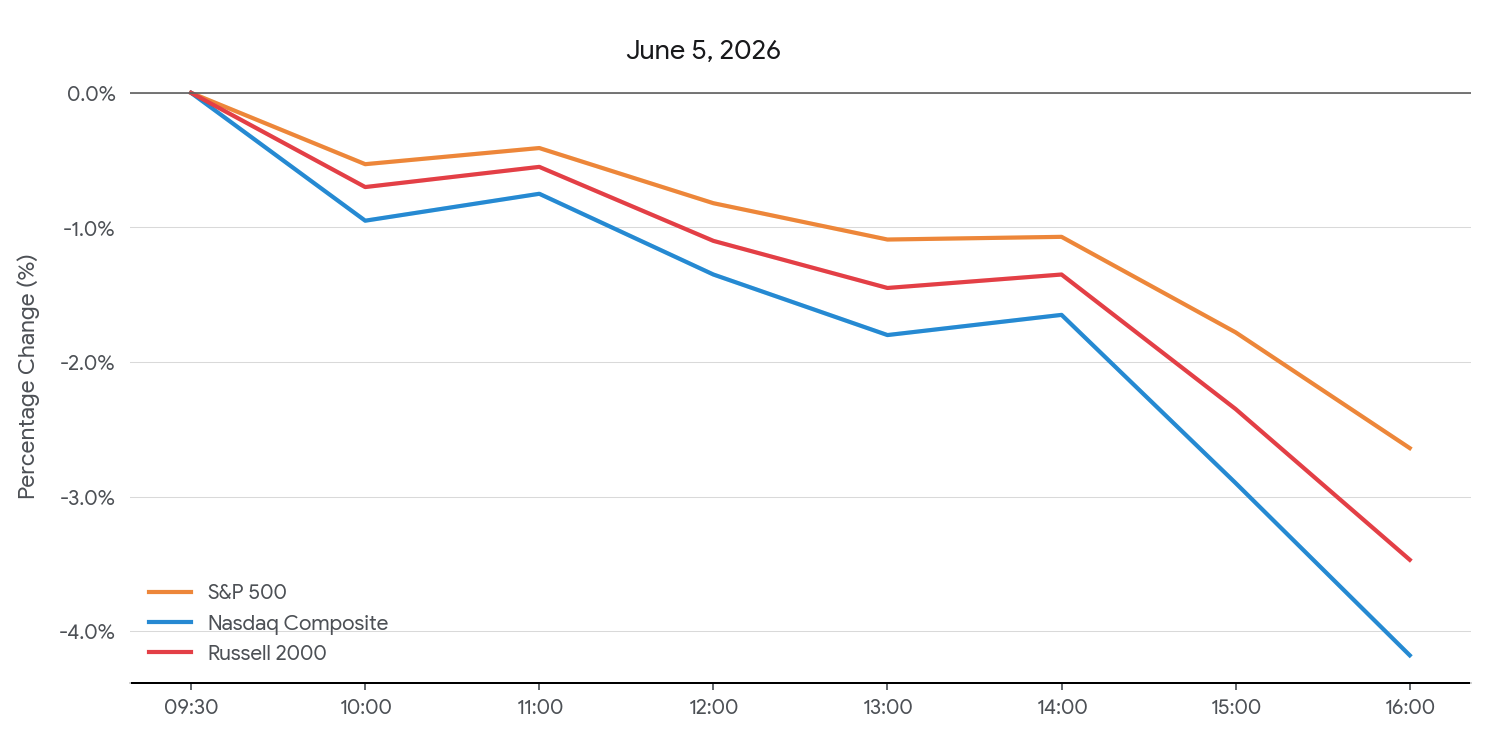
Later, I learned the market day was brutal. The S&P 500 fell -2.6%. The small-cap Russell 2000 index closed down -3.5%. Worst of all, the Nasdaq Composite plunged -4.2%, dragged down by a massive selloff in semiconductors. (SMI's Sector Rotation fund, a semiconductor ETF, was down more than –11%!)
I knew nothing about all this at the time. My biggest concern was that I couldn't find the "chuck key" for my drill, and I needed it to install a few decking screws. The market was tumbling, but I had other matters occupying my attention.
Unaware but not off guard
Learning later about the market selloff, two things occurred to me. First, I had no anxiety. As the downturn unfolded, I knew nothing about it. I was enjoying a nice springtime day, doing manual labor. (Sometimes, ignorance can be your investing ally.)
Secondly, I remembered the chart SMI's Mark Biller created for our June issue. It showed the incredible run-up in semiconductors in recent weeks and suggested that a sharp pullback would not be surprising.
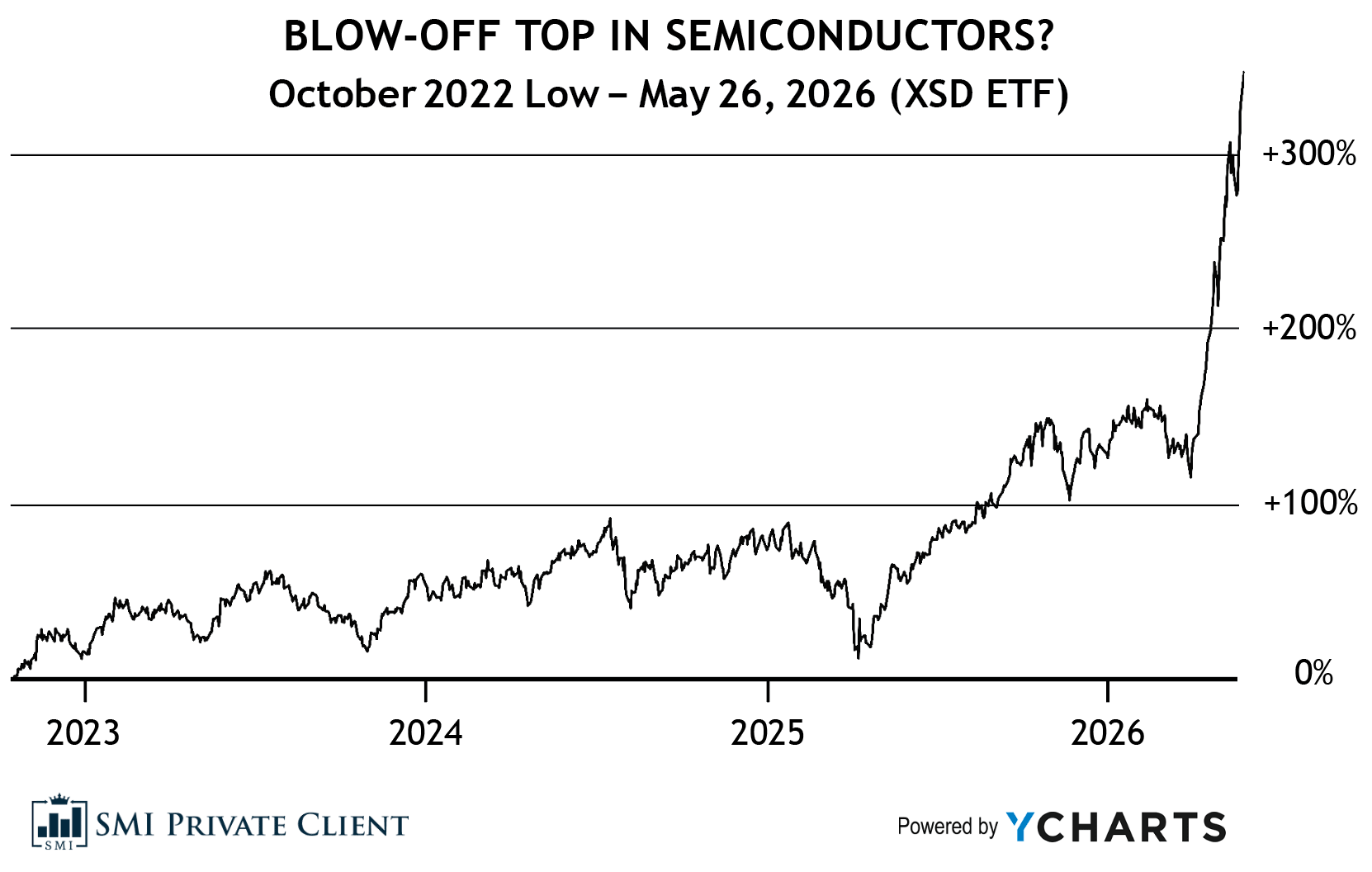
So, even after learning about Friday's selloff, I wasn't surprised. Rapid upward moves are often followed, at some point, by sharp declines. Markets rarely move exclusively in one direction for long.
Investing advice for times like these
Of course, at some point, all bull markets reach a top and roll over. Did that happen last Friday? Possibly, but market tops (and bottoms) aren't recognizable in real time. We can discern them only in hindsight.
Although today's rebound suggests that Friday was just an unpleasant pullback along the market's upward journey, who can say for sure? No one. Not yet anyway.
In his June article, How to Handle a Bubble, Mark laid out SMI's advice for times like these when a bull market has run far and long, and sharp pullbacks stir anxiety:
Stay invested. This assumes you’re using an appropriate blend of SMI’s strategies, some of which have defensive properties that we believe will help reduce (not eliminate) the impact of future bear markets....
Have reasonable expectations. This applies both to your overall portfolio and to each individual component. We know that by continuing to invest, specifically in the tech and semiconductor themes, we’re likely to give back a portion of our late gains when the market either moves on from the tech/AI theme, or worse, finally shifts from bull market to bear. Hopefully, you’ve made peace with that idea so it won’t be upsetting when it eventually occurs....
Play good defense. While Sector Rotation and Stock Upgrading are exposed to the initial stage of market declines, [SMI's Dynamic Asset Allocation strategy] plays a vital role in incrementally playing defense within a portfolio.... [DAA] always has some defensive positioning in place via its SMI 3Fourteen REAL Asset Allocation ETF (RAA) holding, and never has more than two-thirds of its remaining holdings in stocks at any given time....
The existence of defensive protocols within Stock Upgrading since 2018 is another reason we can confidently keep Upgrading money invested right through the end of a bull market, while still expecting some reduction to the losses inflicted by an ensuing bear market. That’s important, because large gains often come in right before bull markets end.
This Friday, weather permitting, I will finish staining my deck. I'll again ignore the market, knowing I'm following the three pieces of advice listed above, and also know that I can patiently wait for SMI's mechanical signals to alert me when the market's trend has truly changed.