

Charitable giving is, of course, a matter of the heart, but it's also an interesting subject to examine from a social-research perspective. Last week, I reviewed two recent studies on giving. Here are some of the findings.
The insurance company Church Mutual conducted a nationwide online survey of about 1,000 adults (not necessarily Christians) who donated to "houses of worship, schools, or non-profit organizations" last year.
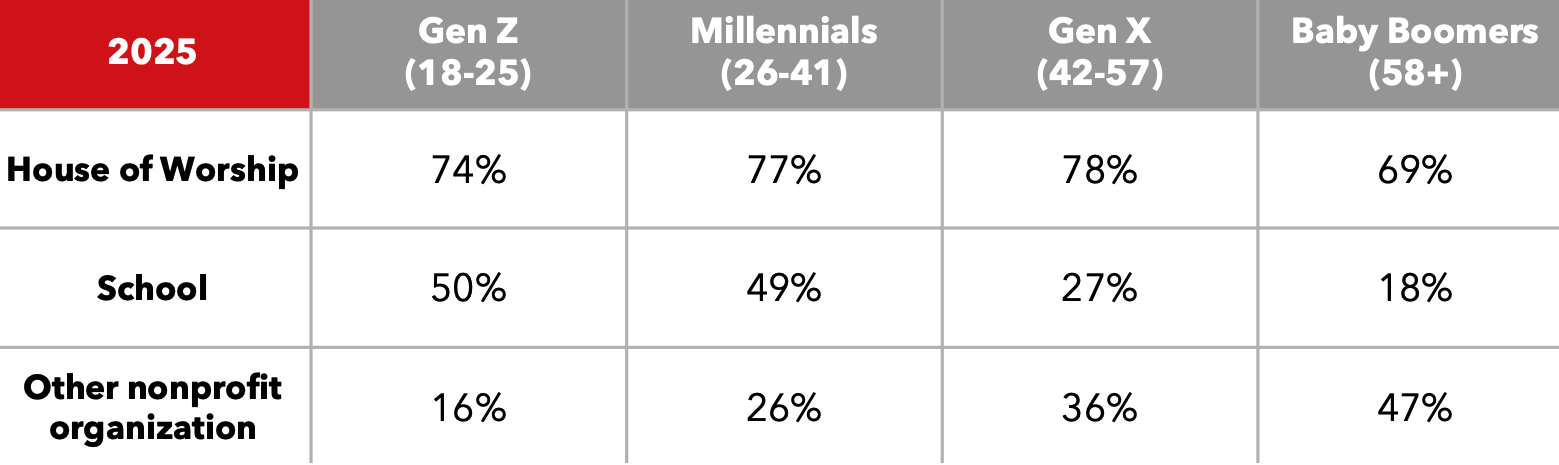
Among those who gave, churches were by far the primary focus of charitable giving, but nearly half of Baby Boom givers (47%) also gave to "other non-profit organizations."
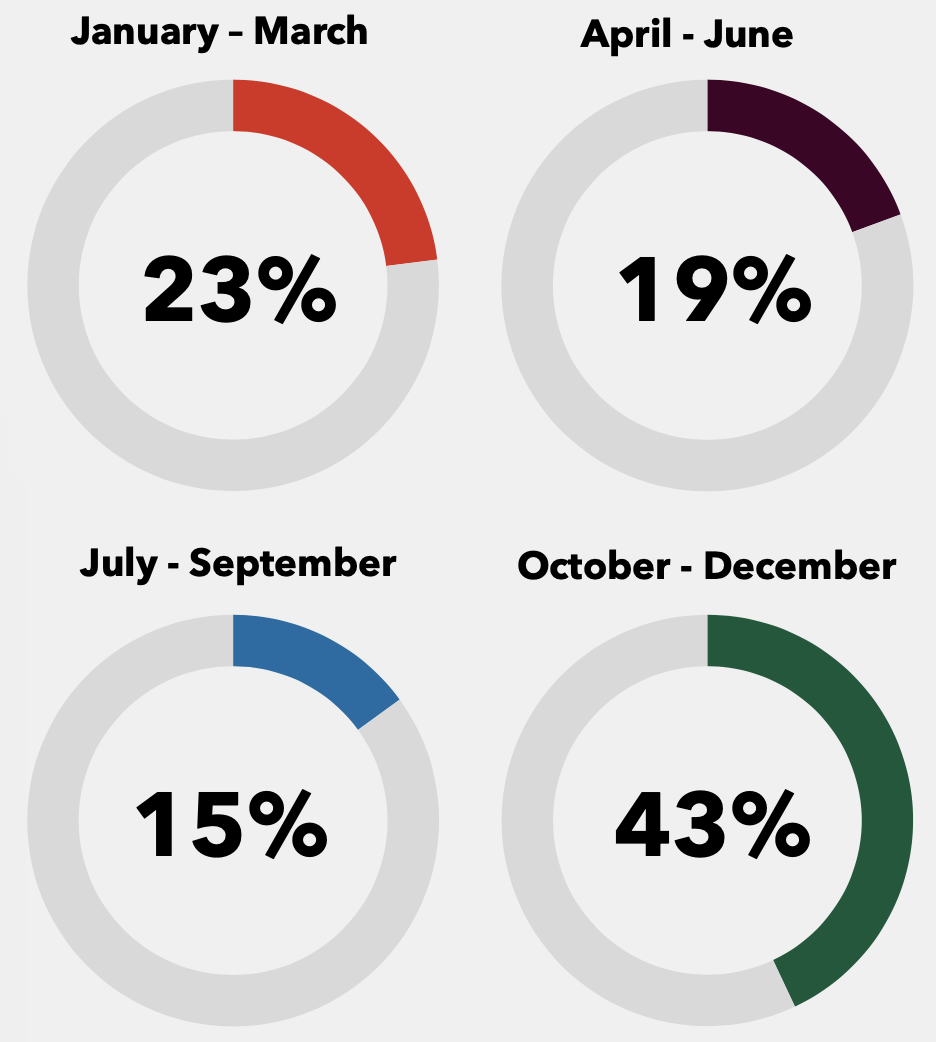
For years, I have heard that donations decline sharply in the spring and summer. In other words, most people don't give consistently throughout the year.
The Church Mutual study (PDF) certainly confirms that! More than 40% of giving occurs in the final quarter, as shown in the graphic at right. That's more than double what is given during the six months from April through September.
How about evangelicals?
The second study (PDF), published earlier this month by Grey Matter Research and Infinity Concepts, focused on Christians, and more specifically on the subset of "evangelical Protestants" (definition) who make up about 37% of Christians in America.
Not surprisingly, the study confirms that the "more evangelicals pray, attend worship and small groups, and read and study the Bible, the more likely they are to give, and the more generously they contribute."
Indeed, the researchers found that "An evangelical with Full spiritual engagement is 30% more likely to give money to church than is someone with Moderate engagement, and a whopping 284% more likely to do so than is an evangelical with Low/None engagement."
Further, the spiritually engaged are much more likely to give to charitable organizations beyond their local churches. "Many people assume church and charity are in competition," write the study's authors. "Our research...[contradicts] that assumption; we find a rising tide of generosity lifts all boats."
The Grey Matter survey also found that those who give money are much more likely to donate their time. "Donors to church are far more likely to volunteer than are non-donors (69% to 23%)," according to the report. "People who are more engaged in their evangelical faith are simply far more likely to be givers" of time and money — and that holds true across every income group.
Not so good
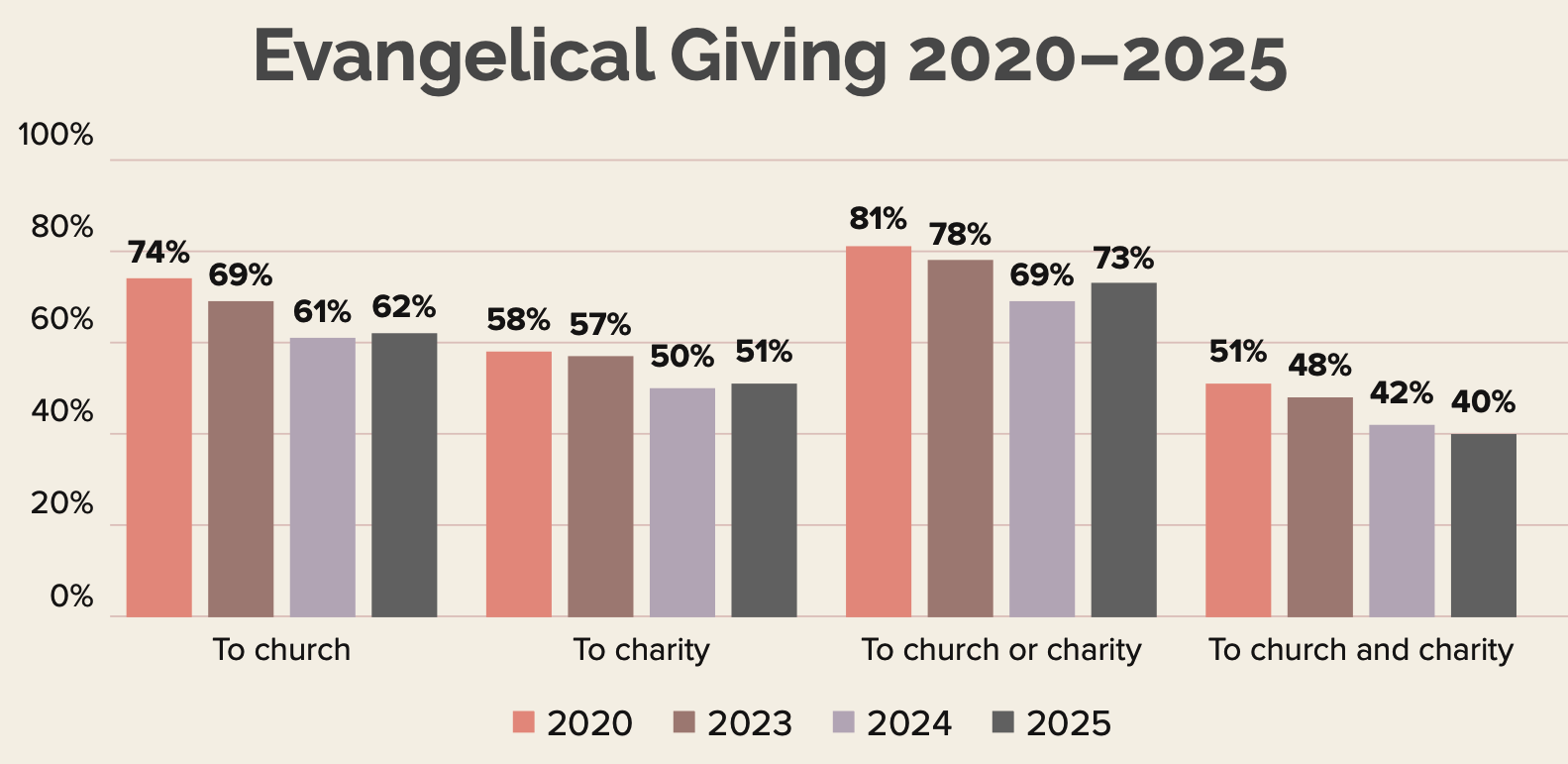
Unfortunately, Grey Matter researchers also found that the percentage of evangelicals who give has declined significantly since 2020, despite a modest bump-up in giving to churches and charities last year.
Even among those with the strongest levels of spiritual engagement, average church giving in 2025 was about 3.4% of household income. For that same spiritually engaged group, giving beyond the church was roughly 1.5%.
The chart below shows the averages among all givers, including those classified as having only "Moderate" spiritual engagement:
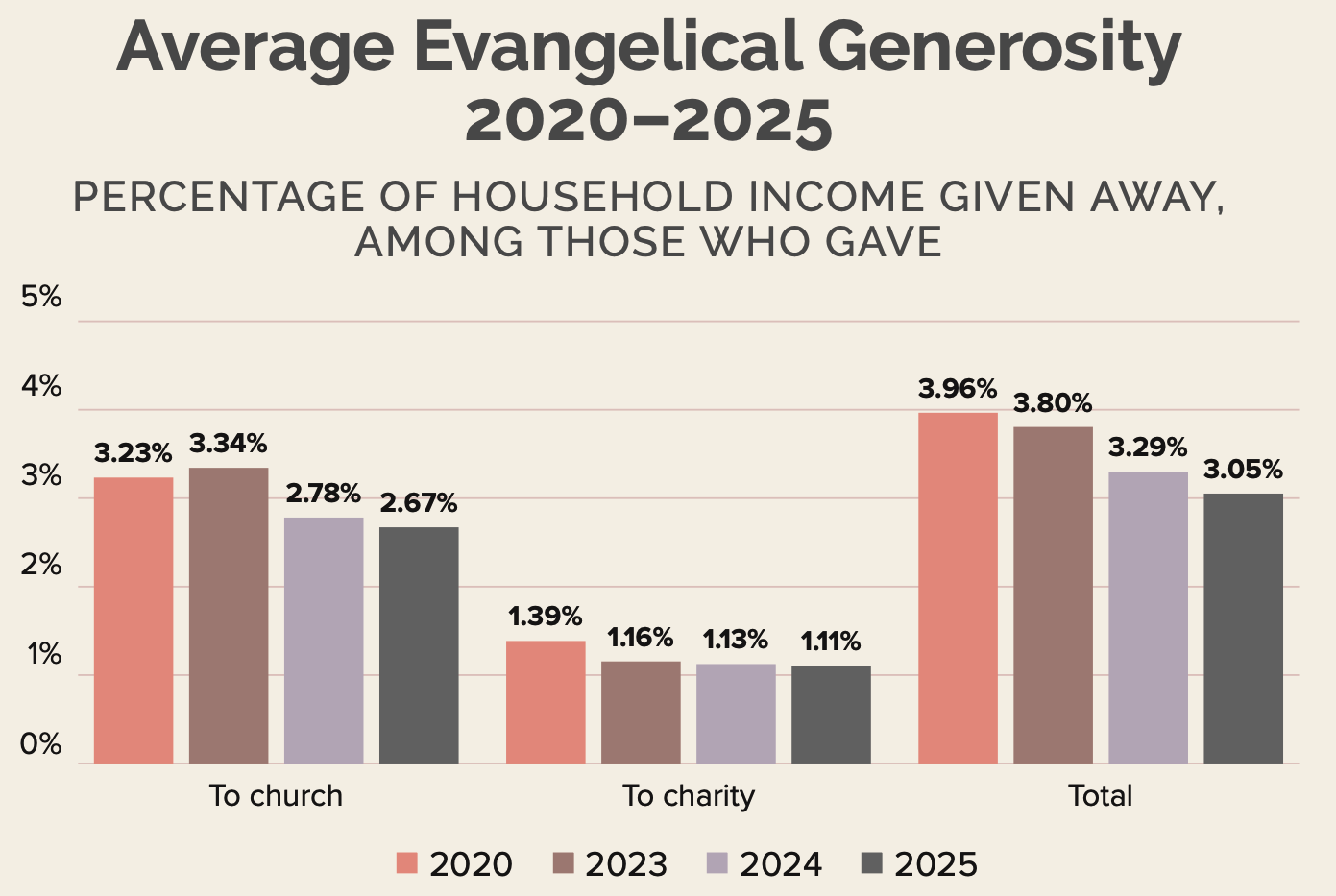
"The full story on evangelical giving," the report concludes, "is that fewer people are giving, and even among those who continue to give, they are giving less on average."
Raising up generous believers
The key takeaway from the Grey Matter and Church Mutual studies is that local churches have their work cut out for them. Raising up new generous givers will require a steady emphasis not only on spiritual formation (bringing believers toward maturity) but also on teaching practical money-management skills.
It doesn't require a research study to know that faithful stewards and generous givers tend to be well-taught in the Faith and to know how to live within their means. Cultivating mature and generous believers is a serious, long-term challenge — and a great opportunity(!) — for every local church.