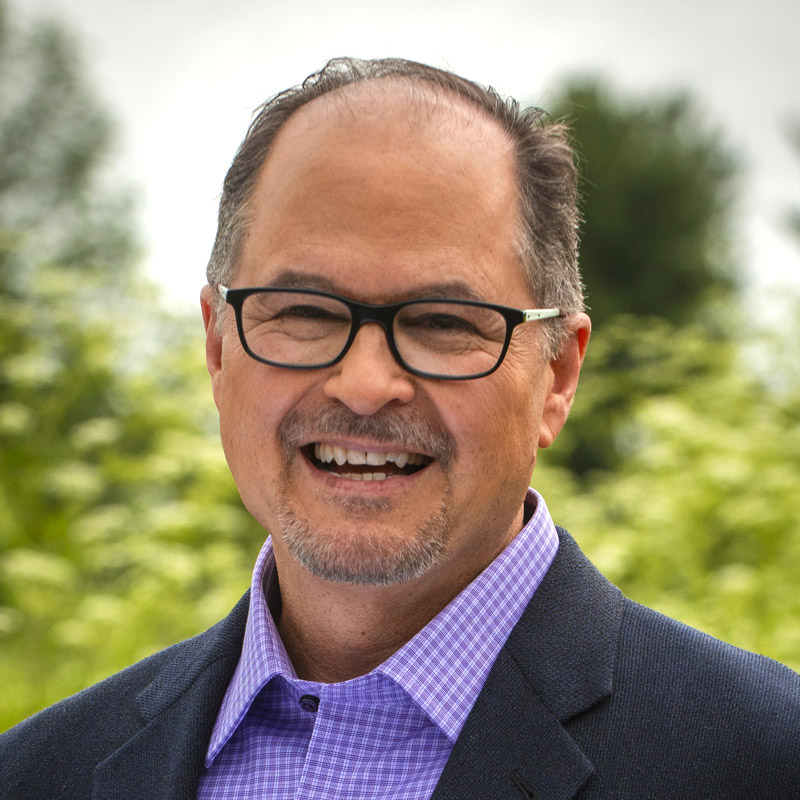

SMI's executive editor Mark Biller joined Faith & Finance host Rob West last week to discuss the recent surge in prices for gold and other precious metals. Mark answered callers' questions about investing in gold and Bitcoin.
To listen, click the play button below. Scroll down to view the transcript.
A note to current SMI Members: The Striking Gold special report mentioned in the program below was prepared for Faith & Finance listeners. For SMI Members, we're developing a newsletter cover article about gold investing. It will be available soon!
Faith & Finance airs weekday mornings on American Family Radio. A different version airs weekday afternoons on Moody Radio.
(More radio appearances by members of the SMI team are posted on our Resources page.)
Transcript
Rob West
Gold has been surging this year, but what's behind the rise and what should investors keep in mind before buying in?
Hi, I'm Rob West. Mark Biller joins us today to talk about investing in precious metals. We'll also be taking your phone calls today at 800-525-7000. That's 800-525-7000.
This is Faith & Finance on American Family Radio, biblical wisdom for your financial decisions. (opening music ends)
It's always a good day when Mark Biller's here. He's executive editor and senior portfolio manager at Sound Mind Investing, and he knows his stuff when it comes to precious metals in the markets. SMI has just released a brand new special report called Striking Gold: Profiting from Precious Metals While Managing Risk, and they've made it free and available for Faith & Finance listeners. You can download your copy today. It's soundmindinvesting.org.
Mark, great to have you back!
Mark Biller:
Thanks, Rob. I've been looking forward to it.
Rob West:
Well, Mark, gold hit $4,200 an ounce this year. Wow! That's up from 2,600 at the start of the year. I didn't imagine we'd be saying that when we started the year.
What's driving the surge and do you think the momentum will last?
Mark Biller:
Yeah, it has been quite a run Rob, and recently it's even accelerated, as if it hadn't been galloping fast enough already. Gold was up 26% last year. Now it's up over 60% this year. In 2025 silver's up 80%. Gold-mining stocks have more than doubled. And it just brings to mind the old saying there's no mania like gold mania, and that's really playing out right now before our eyes.
There are a few reasons that gold has really taken off over the last few years. I would say the first leg of this gold bull market really started in 2022, and that started with the Russia invasion of Ukraine. And the reason that I point to that is kind of the real trigger here is that that's the point when global central banks really started buying gold aggressively and it was directly tied to the invasion really more specifically when the US sanctioned Russia, kicked them off the SWIFT financial system, and then ultimately confiscated their dollar-reserve assets as a result of the war and the invasion.
Other countries and other central banks said to themselves, we've got to diversify our savings assets out of dollars out of treasury bonds specifically because there's a real risk of the US using that as a weapon. So that I think was the first leg of the gold bull market. Central banks started buying aggressively.
Then since this summer we've seen the second leg of this precious metals bull market kick in, and that's with investors increasingly becoming concerned about the loss of their purchasing power. May have heard the term the "debasement trade." that's been in the news a lot, and, basically, it is that fear of currency debasement. And so institutions, advisors, individual investors have started rethinking their very, very low exposure to gold in their portfolios and we're seeing the results of that.
If you boil it down, Rob, fundamentally, I think everybody understands that the U.S. government and other governments around the world can't continue to spend 7% more than they take in every single year. This debt situation is becoming more acute and people are realizing there really is no intention of backing off that kind of spending. And so that really kicks in that debasement fear.
We've seen governments throughout the ages to base their currencies and inflate their way out of debt problems. And so when that happens, the appeal of our treasury bonds goes down around the world as the preferred savings asset and gold is sitting right there as the 4,000 year old alternative that looks pretty attractive.
Rob West:
Mark, take us back. When you look at history, how do today's gold and silver prices compare with, let's say, past cycles?
Mark Biller:
That's a great question, Rob. So gold actually has set a new all time high, both in just unadjusted dollar terms — the $4,200 we keep talking about — but also in terms of inflation-adjusted prices. This year gold has smashed through its 1980 peak in inflation-adjusted terms.
And that's an important point because when we look at the rest of the metals market — specifically silver, also true of platinum and some of the others — silver the last week or two has just blown through the $50 an ounce level, and that's a very significant price point because $50 an ounce was roughly the high that we hit back in 1980, 45 years ago, believe it or not.
And then we hit that price roughly the same price again in 2011, so 14 years ago. However, when you adjust those prices — $50 an ounce back in those time periods in inflation-adjusted terms — silver has not made a new inflation adjusted high. You'd have to get to about $70 an ounce and silver just to match the 2011 peak, and it would be even more if you were adjusting back to the 45-years-ago, $50-an-ounce level.
So one of the big takeaways there, Rob — a couple. One is a really bullish investor would say, "Well, these metals, silver, platinum and so on have further to run to get to their inflation adjusted peaks." So maybe that's the more aggressive play. It definitely is the more aggressive play. But the other point that I would add to that is that when we talk about these prior highs, it really shows how precious metals tend to get really hot every now and then they go through long bear markets where their prices tend to fall considerably.
And so it's really important for investors to be aware of that longer term cyclical pattern of big booms, but also big drawdowns.
Rob West:
Yeah, that's really helpful and I think having that perspective as a backdrop helps us see where we are right now.
Now, some would argue, Mark, that gold isn't really an investment in the way stocks and bonds are. Explain why that is.
Mark Biller:
Yeah, it's the same reason that it's so tricky to really assign a value to gold. What is the right price for gold? Well, who knows? Gold doesn't do anything. So there's no income, there's no profit, there's no cash flow. All of the traditional measures and tools that we use to value companies and by extension company stocks and bonds, you can't apply those measures to gold because they don't exist. So that's one reason why a lot of people view gold more as a "store of value" rather than a productive asset like stocks and bonds.
There are lots of old rules of thumb, like "an ounce of gold buying a fine man's suit" — 800 years ago, 400 years ago, 100 years ago, and still today. That kind of captures the "store of value" idea.
You can also compare the price of gold to other things like the price of a barrel of oil — which those comparisons can give you a sense of if gold is getting ahead of its historical pattern, its valuations in the past.
I think the important thing, Rob, is gold really needs to be looked at as an alternative currency to all of the fiat currencies like the dollar, the Euro, the yen and so forth. When you think of it as an alternative form of currency, then it becomes a little more evident that what's really going on is the value of our paper. Money is being debased or devalued while gold is holding its value. And that's why people are so keen to hold gold in an environment where they feel like the government can't be trusted to maintain the value of their currency.
And right now, of course, gold is getting an added kicker by virtue of the fact that a lot of investors are reevaluating gold's place in a portfolio and, as they're wanting to own more of it, then of course that adds a push to the price as they want to hedge that exposure to the fiat currency system.
Rob West:
Let's head to the phones. John is in, let's see — I'm sorry, Drake was first in Alabama. Drake, go ahead.
Caller:
Hey, yeah, I appreciate your show. I wanted to ask a question. Just love the Lord and I own a real estate business and I'm kind of a student — not kind of a student, I am — of just money. Historically.
I have a large exposure to Bitcoin and obviously our Lord of Savior is a mathematician! He created everything!
I don't hear it discussed at all. It's not like we're three years into this. We're 15, 16 years into this asset that has basically performed better than any asset in the history of the world thus far. There's so much silence around Bitcoin today and I just want to get your thoughts on it, and I certainly appreciate you taking my phone call today.
Rob West:
Well, happy to do it, and Mark and I have actually talked extensively about this — especially as of late, as Bitcoin has gone mainstream and, secondly, that a lot of people call it "digital gold." So I think it's very appropriate for today's conversation.
Mark, we've got a minute before the break. Why don't you begin to get into this and maybe we'll pick it up after the break?
Mark Biller:
Sure, yeah, that's a great question, Drake. Bitcoin and gold are both, I would say, the dual primary prongs of this debasement trade to protect against the debasement of currency.
There is a lot of talk about Bitcoin, but it has backed off a little lately, and part of that is because gold and Bitcoin don't always move at exactly the same time, even though they're broadly viewed as the same antidote to the same problem. And we can unpack that a little more on the other side of the break.
Rob West:
Mark Biller is here today. He's executive editor at Sound Mind Investing. Check it out, soundmindinvesting.org. Back with more questions after this.
Rob West:
Before the break, we were talking to Drake. And, Mark, you were weighing in on just how to think about both gold and specifically Bitcoin. I know you have said as of late, it's gone mainstream. A lot of that is because we have the first pro-[crypto] U.S, president, we've got a different regulatory environment today. We've now got institutional buy-in of Bitcoin with ETFs that are widely available. So how are you thinking about that investment today and where does it fit in the portfolio?
Mark Biller:
So in a nutshell, Rob, Bitcoin and gold are the two forms of hard money that a lot of investors are fleeing to try to protect against this debasement issue that we've been talking about. In fact, in the program you and I did, I don't remember a few months ago, listeners could go find that, I'm sure on your website we referred to how a lot of folks view Bitcoin as digital gold — and it kind of gets into the idea that there is a demographic split where a lot of younger people prefer and are more comfortable with digital assets like Bitcoin, whereas a lot of older investors, and I include myself in that camp, are actually more comfortable with gold. It's 4,000 year history and so forth.
I think that both of them have really exhibited their ability to prosper in this type of environment. But like I was saying before, the break, they don't always move exactly together. They'll tend to run out of sync with each other a little bit. And we're seeing that right now as we're getting this massive surge in precious metals. Bitcoin has actually been pretty quiet kind of standing still, which is a little counterintuitive, but we see that go the other way sometimes too, where Bitcoin will go through a big run while gold is relatively quiet. I think you have to just look at it over the longer term perspective that both of these assets are trying to accomplish the same thing and are being used in a lot of cases in similar ways in portfolios.
But the big difference, Rob, that I would just highlight is we talked about that tailwind of central banks buying gold. I heard recently a shocking statistic that for the emerging markets, their central banks just to get their percentage of gold reserves up to the level that the developed market central banks are already at. Just that move alone would require these emerging market central banks to buy the next six years of total global gold supply. And so that's the kind of long-term tailwind that has investors really excited about gold. And I'm not trying to pump the tires here to get everybody all hyped up, but that is the type of argument that says this could have a ways to run.
The caveat there for Bitcoin is central banks aren't buying Bitcoin. Now, maybe someday they will — maybe after 20 or 30 or 50 years they'll think of Bitcoin the same way they do gold, but that's not the reality today. And so that's one big leg of this argument for gold going forward that really isn't there for Bitcoin. So that's just one little thing to think about.
I'm definitely not anti-Bitcoin, as listeners will attest. But you do have to be very careful because they're very different assets at this point in their lifecycle, and you have to adjust in your percentage of holdings for the tremendously higher volatility of Bitcoin.
In practical terms, what that means is if you wanted to have, say, a 5% allocation in gold, you might have a 1% allocation in Bitcoin to volatility-adjust for just how much more volatile Bitcoin has been than gold. And I think that that 4-to-1, 5-to-1 type of ratio is really appropriate because we've seen Bitcoin fall 75% three or four times in the last decade, whereas the largest drawdown in gold has been about 20%.
So it's a vastly different asset, especially if you're thinking about this through sort of a "safety" lens. This is a safety play for a lot of people. Bitcoin really doesn't fit that just yet.
Rob West:
So if you're saying of that let's say gold allocation in a portfolio, perhaps 4- or 5-to-1 on gold-to-Bitcoin — if it's appropriate at all for you as an investor, that's perhaps the ratio. But what is that total precious metals or gold allocation you think that most investors should have?
Mark Biller:
Yeah, great question. It does depend of course on the individual. That's almost always the answer with these types of questions. But just for reference, for most of our SMI clients, we've had them in the 8% to 10% range in gold this year. That's a lot more than a lot of advisors would go, but we have some reasons for that. Of course, you can read about those in the special report. We go into a lot of detail of how we get to that figure.
In contrast, we do have a little bit of Bitcoin exposure for most of our managed clients. That's actually a bit less than 1%. So you can see that we take that very seriously. We have a lot more gold exposure.
I think that 5% to 10% of a portfolio combined between those two assets is probably an appropriate goal for most folks if they want to do this. If they don't, of course you could go lower
Rob West:
Just 45 seconds before our next break. How do you think about owning Bitcoin and gold outright versus the ETF in both cases?
Mark Biller:
Yeah, we do both as far as the gold side. With Bitcoin, it's a lot more treacherous to own it yourself. The hardcore enthusiasts say you have to do it, but really it gets kind of dangerous for a lot of folks. A lot of horror stories of people making mistakes and losing [their Bitcoin]. With gold, a small physical position supplemented by those ETFs is the way we recommend most people approach it.
Rob West:
Excellent. All right, we'll head back to the phones here after this break. Mark Biller is here today. 800-525-7000. Check out this special report at soundmindinvesting.org. We'll be right back.
Rob West:
Helping you see God as your ultimate treasure and money a tool to accomplish God's purposes — this is Faith & Finance on American Family Radio. I'm Rob West.
Mark Biller here today. He's our resident go-to guy on the markets and the economy. Today we're talking about this incredible runup we've seen in the price of gold — up from $2,600 an ounce to now more than $4,200 an ounce. What's driving the surge, and how should you think about investing in it? That's what Mark has been addressing today.
Let's head back to the phones Arkansas. Chris, go ahead.
Caller:
Hey guys, I appreciate you taking my call. If I attempt to purchase, or when I purchase gold, how do I know I'm actually buying gold? I can't go someplace and see the bars. How do I know I'm really purchasing gold?
Rob West:
Yeah, great question. Mark?
Mark Biller:
Yeah, it is a great question Chris. And that's one of the reasons why a lot of people like to have at least part of their gold allocation be physical gold that they own themselves — because people want the surety of that.
Of course, when you start accumulating that in any size, you start to run into other problems. There's kind of a trade off, because most people don't want to — and shouldn't — have a whole lot of physical gold in their home or whatever. You get into a safety/storage type of situation there where you got to figure out, "How am I going to store this?"
The ETFs — various folks have widely varying views on those. There are some people who say that ETFs are not good at all because you can't verify and so forth. The ETFs do have audits of their gold holdings, regular audits. They have, supposedly, the physical gold backing every bit of those ETFs.
There are some — and if you get into our special report, you'll see there's a section on why we prefer one particular [ETF] that we feel has a little bit stronger claim to the physical-gold argument. And part of that is that if you have huge amounts in that ETF, you can actually take gold, physical gold settlement in the form of gold bars, but you have to have an enormous amount for most people. But it does kind of give a secondary degree of comfort that they actually have the gold they say they have.
There are other services as well, but you run into the same type of problem with the "digital gold" services where you supposedly have your own marked gold holdings in a vault somewhere. But, of course, without the ability to go and look at it yourself, ultimately you're stuck trusting somebody somewhere through the chain — unless you own it and hold it and have it physically yourself.
So, no easy answers there Chris. But I feel like for our purposes, like I said, we do a blend of the two. A lot of our folks have a core holding of physical gold that's kind of a buy and hold forever.
The other problem with owning your own physical gold is it's very expensive to transact, so you don't want to be buying and selling typically in physical gold.
But those are a few thoughts Chris. Unfortunately, the best I can really tell you is if you want that absolute certainty, it really does require the physical path. But there are some distinctions between the different paper gold products — the ETFs — and in the special report we addressed that a little bit and let you know which one we use and why we made a switch a few years ago from one to another one because of that very issue.
Rob West:
Mark Biller's here today. We're talking precious metals and how that might fit in your portfolio. Let's go to North Carolina. Chris, go ahead.
Caller:
Yes, good morning! How are you all?
Rob West:
Doing great. Thanks for your call.
Caller:
Good. Question: I have a couple ounces of gold and about 150-200 ounces of silver, and I haven't seen prices like this in a couple of decades. And I'm wondering what does he see as the ceiling, and is it advisable to sell and then get the money and invest it in stocks, et cetera?
Rob West:
Yeah. Are you highly concentrated in this position, Chris? What percentage of your overall investible assets does this gold position represent?
Caller:
Well, I'm about six months out of a bankruptcy and don't have a whole lot of cash — probably 50% or more.
Rob West:
All right. Yeah, so I would say regardless of where gold's going from here, the bigger issue is how should you be positioned in your financial life? And I would start with — well, we need an emergency fund in cash of, maybe in a high yield savings account, but very liquid of three to six months expenses. And you need to make sure you're not, don't have any high interest debt. And then we need a balanced spending plan where you've got a little bit of margin every month.
And then we think about investing, and when it comes to your investment portfolio, whether that's in a taxable account or preferably in like a Roth IRA, something that's growing either tax-free or tax deferred. As Mark said earlier, the most he would recommend for his clients in a gold position would be 10%. And that's not even for everybody. That would just be his typical SMI investor. And I would agree with that — somewhere between 55 and 10% IS the right amount.
So I think regardless of where it's going from here, I would probably look at this as an opportunity to say, "Hey, gold has done incredibly well this year. I'm highly concentrated, which adds risk, especially in a volatile, more volatile asset class than stocks and bonds over the long haul. And so this is an opportunity for me to shore up my financial foundation" — which starts with that emergency fund and the spending plan and then builds a properly diversified portfolio from there.
So I think that's where I'd come from it. Mark, anything to add to that?
Mark Biller:
I agree with that 100%. One of the problems that people are having right now, apart from the diversification question, is right now stocks are also ripping. And so we're in an environment where all of our options are going up pretty rapidly and feel very expensive. So there isn't that automatic, "Man, gold is ripping, stocks are low. I'm going to rotate into that undervalued asset." It's a feeling like, "Right now, I don't really have anywhere to turn where things prices don't seem kind of crazy."
And part of the reason for that, Rob, is that this debasement trade actually extends to all types of real assets. And I would include stocks in that because companies tend to historically hold their value — which makes sense. As the currency is debased, real companies producing real things stay valuable. Real estate stays valuable. It also is fairly expensive right now, and so there aren't a lot of easy answers.
But on just a pure diversification play, I wholeheartedly agree with what you said for Chris. I think that diversifying that is going to be a good move.
One thing that you see with precious metals over and over is we do tend to get these sort of parabolic spikes, and then we have big declines after. I mentioned earlier how silver has hit $50 an ounce twice before. Well, when it hit $50 in 1980, it ended up falling 91% from there. When it hit $50 in 2011, it fell 70% from there. And so we see these patterns of big spikes and big declines.
So it really is not a bad idea to take a few of those chips off the table and book some profits and diversify that. That's not to say that stocks won't go down. Of course they will at some point. But the degree of loss can be a lot swifter in the precious metals — at least historically, we've kind of seen that pattern.
So spreading out our bets to "seven or eight" for we "don't know what misfortune may come upon the earth." That's the biblical wisdom, and that's what we're really leaning into — more than which of these assets do we think is going to do the best over the next year or three or five.
Rob West:
That's helpful, and that's a great segue to Diane's question in Mississippi. Diane, go ahead.
Caller:
Yes, thank you so much for taking my call. Mark, in the last bull markets in gold and silver, what was the causes of their declining after hitting their all time highs, and what do you think could stop this bull market in gold and silver at this point?
Mark Biller:
Great question. So I would look at the last real big bull market in precious metals as the 2000–2011-ish push. And part of that, of course, did correspond with the Financial Crisis that we had in 2008 and 2009. And coming out of that crisis, we had the biggest government response we'd ever seen to that point — which we've since eclipsed in the post-COVID response. But at that point, most financial folks and investors expected a lot of inflation.
In hindsight, we got a lot of inflation and asset prices. We didn't see a lot of Main Street inflation. And so the fear that a lot of precious metals investors had in 2000, 2009, 2010, 2011, that pushed that final surge of that bull market didn't materialize the way that people expected. And as that risk faded, as that fear faded, so did precious metals prices.
A lot of times precious metals prices correspond very closely to the amount of angst and fear that is out there in the environment.
And right now we're seeing that again. We've got wars breaking out. We've had a "plague" with COVID recently. We've got a lot of concern about governments and their overreach. And so I guess, Diane, it's speculative of course, but if we were to see some things happen that lessened fear — as we have peace in these situations where we have war, as we see governments potentially becoming a little bit more responsible and putting plans in place that makes sense for how they're going to deal with their debt without inflating their way out of it — those would be factors that I think would cause investors to kind of back away from precious metals and the "fear trade" aspect of that.
Rob West:
Very good. Diane, thanks for your call.
Mark, that's going to do it for us today, sir. Always appreciate your time.
Mark Biller:
Oh, it was a lot of fun. Rob. Thanks for having me back.
Rob West:
Absolutely. Folks, check out soundmindinvesting.org to download this new special report called Striking Gold. And learn about SMI's Private Client group where you can get some incredible investment-management counsel there.
Well, that's going to do it for us today. Big thanks to my team today — Patty, Devin, Taylor, and everybody here at FaithFi.
Here in the fourth quarter is a big time for us to hear from you. We're listener-supported. If you love the ministry, you love the program, check out faithfi.com/give. We'll see you tomorrow!