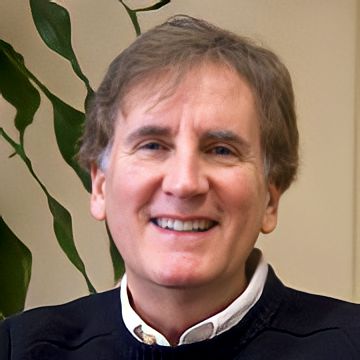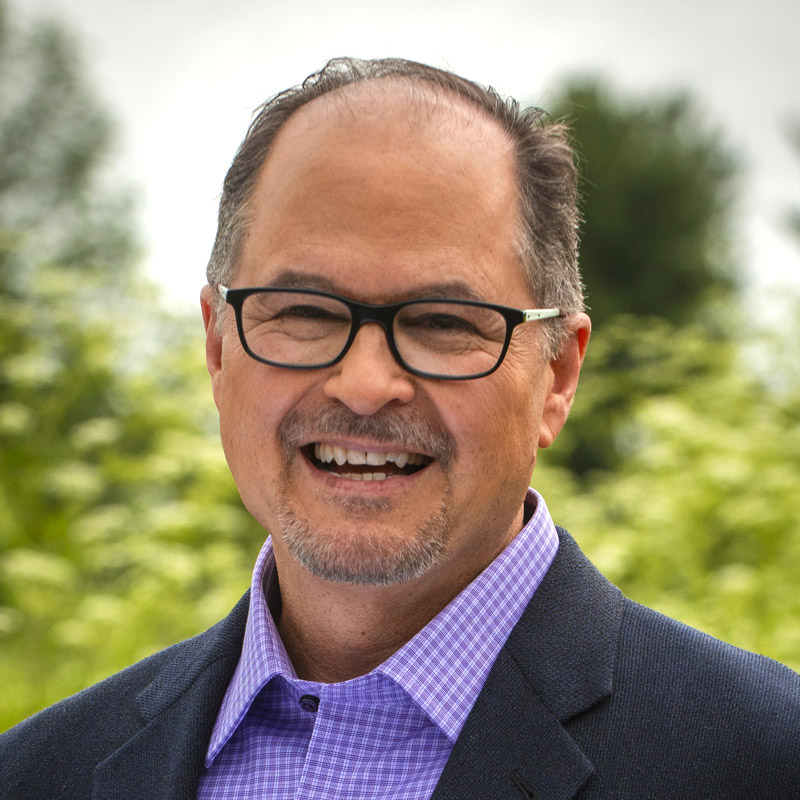

Warren Buffett, who recently announced his retirement, is widely recognized as one of the most successful investors of all time. SMI's Mark Biller recently talked about what other investors can learn from Buffett on radio's Faith & Finance program. Mark and host Rob West also responded to listener questions.
To listen, use the play button below. Scroll down to view the transcript.
Faith & Finance airs weekday mornings on American Family Radio. A different version airs weekday afternoons on Moody Radio.
(More radio appearances by members of the SMI team are posted on our Resources page.)
Transcript
Rob West:
"It takes 20 years to build a reputation and five minutes to ruin it. If you think about that, you'll do things differently."
Hi, I'm Rob West. With those words, Warren Buffett reminded us that character and integrity matter, especially in the world of money. Now, after more than 60 years of market-shaping moves and famous one-liners, Buffett is calling it a career. Today, Mark Biller joins us to reflect on his legacy and share what timeless lessons every investor can learn from it.
Then it's on to your calls at 800-525-7000.
This is Faith & Finance on American Family Radio, biblical wisdom for your financial journey. (opening music ends)
Well, we're joined today by my friend Mark Biller, executive editor at Sound Mind Investing. SMI recently ran a thoughtful article reflecting on Warren Buffett's remarkable investing career. So today, we're taking a closer look at the principles that defined Buffett's approach — many of which, knowingly or not, reflect biblical wisdom about money, patience, and stewardship.
Mark, great to have you here.
Mark Biller:
Thanks, Rob. Good to be back with you.
Rob West:
Perhaps just start off today by giving us a snapshot of just how successful Buffett has been over the last 60 years.
Mark Biller:
Yeah, absolutely Rob. So consider this. According to The Wall Street Journal, if you had invested $100 in Buffett's Berkshire Hathaway stock back in 1965, it would've grown to a fairly mind-blowing $5.5 million by the end of last year. Now, in contrast, if you'd taken that same $100 and put it in the S&P 500 index, it would've grown to $39,000.
So $39,000 versus $5.5 million. And that's the reason, Rob, why when people are asked to name the greatest investor of all time, most people immediately think of Warren Buffett.
Rob West:
No doubt about it, and that is staggering.
Mark, the article was really thoughtful. I know you all really did a deep dive into some of the things we can take away from Buffett's style and approach and his life. What did he do differently? How would you characterize that?
Mark Biller:
There are a few things we can point to. So first of all, Buffet's widely known as a "value" investor, which simply means that his specialty was finding undervalued stocks or businesses and buying them cheap. And he definitely did that many, many times through his career.
But one of the things I think is really overlooked sometimes is Buffett was flexible enough to apply that value framework that he had to companies that most people wouldn't consider to be "value" companies. And a good recent example of that was the huge position he built in Apple over the last decade. Now, he did recently sell most or all of that, but most people don't think of Apple as a "value" stock, and yet he found a way to make that work within his system. So flexibility was a big thing with him.
Another great early example of his outside-the-box approach was deciding early on that Berkshire wasn't going to issue dividends. Now, that doesn't sound like a big deal today, but back in the 1960s that was totally flouting the conventional investing wisdom. Everybody paid dividends. The bottom line there was Buffett just really had conviction that he could generate better returns for his investors by him reinvesting the profits in the company and increasing its share value. And he was obviously quite right about that one.
Rob West:
Absolutely.
Mark Biller:
A last one, I guess, that I'd point to — and other people have pointed out as well — is Buffett's patience. So he was pretty famous for building these really large cash positions within his portfolio until the right opportunities would come along. If he didn't think there were good opportunities, he'd just sit and wait, and those opportunities would eventually come along — usually when the market was selling off sharply and other people were having to dump things at cheap prices. And that led to one of his most famous quotes, which is, "Be fearful when others are greedy and greedy when others are fearful."
Rob West:
Yeah, no doubt about that. Now, we certainly, and I know you wouldn't encourage fear or greed as a mindset, but Warren Buffett was really pointing to something deeper, which is the value of staying disciplined when others panic is really important.
So while we can't follow his exact path, are there takeaways here that we can apply to our own investing decisions?
Mark Biller:
Yeah, there really are, Rob. There are a lot of 'em. And I want to go back to something you said in the opening 'cause I loved it, where you said that "knowingly or not" that Buffett's, a lot of his process reflected biblical wisdom.
And I think that's perfect because I've never seen anything that indicated to me that Buffett was a Christian. And yet when we look at how he implemented his process, the integrity and the business side of his dealings — we know as Christians, your listeners are very familiar that the fruit of the Spirit include and highlight "patience" and "self-control." And those are probably the two capstones that you would put on a guy like Buffet in terms of his investing process.
So I think it's a great example of a place where — no, he probably didn't live exactly the way we would espouse in some areas and things like that, but there's a lot to learn here. And like you mentioned just now, he was very generous in a way because he would write these amazing annual shareholder letters, and he'd have these a couple of days long annual conferences out in Omaha where the Buffet disciples would flock out there and he and his partner Charlie Munger would kind of hold court. And just tons and tons of wisdom would kind of flow through those — investing wisdom.
And like you said, he was famous for these one-liners, these pithy quotes — and that's really what led to this article was there were so many, we were like, "We need to just go through and pull a bunch of Warren's greatest hits here."
One that we liked a lot was, "If you don't find a way to make money while you sleep, you'll work until you die." Which I thought it's just a clever way of highlighting "You need to put your money to work." It's kind of Investing 101. He made his first stock investment when he was just 11 years old, and so he quickly discovered the benefit of that quiet compounding and having your money working for you even when you're not paying attention to it.
Another one I really liked was he said, "Risk comes from not knowing what you're doing." Now, a lot of people — we run into this sometimes with callers — they'll equate stock market investing with gambling. And admittedly, sometimes there is some overlap. It can feel kind of similar, especially if you're speculating and day trading and that kind of thing. But for people who are adhering to certain timeless principles — like diversifying your holdings, keeping your emotions in check, maintaining a long-term perspective — all of which are biblical principles, that quote of knowing what you're doing really does apply. In other words, if you're putting these principles into practice, investing in the stock market has proven to be one of the best opportunities to build wealth for people over time.
Rob West:
No doubt about it in his life. And you mentioned just the results of his investments, just absolutely incredible what he's been able to do by finding value in companies that are doing incredible work. And it has paid incredible dividends along the way.
Mark, he was also famous for not letting global events dampen his enthusiasm for investing, wasn't he?
Mark Biller:
Yeah. He would often come in the middle of a crisis, like the global financial crisis in 2008, and either write an editorial in a newspaper or just somehow encourage people to keep the faith. One quote he said was, "In the 20th century, the United States endured two world wars and other traumatic and expensive military conflicts, the depression, a dozen or so recessions and financial panics, oil shocks, a flu epidemic, and the resignation of a disgraced president. Yet the Dow rose from 66 to 11,500."
So the point was all these negative things happen along the way, and yet the relentless march of the market higher.
Another related Rob, he said, "For 240 years it's been a terrible mistake to bet against America and now is no time to start." I love that one.
A couple of the really consistent themes in Buffett's annual letters were this endless optimism about American businesses, and, really, an almost giddy enthusiasm for the opportunity to become a part — or in his case, sometimes a sole — owner of some of these businesses through stock market investing.
Rob West:
Mark, we've been unpacking some of these quotes from Warren Buffet that are just gems. Any others that stand out to you?
Mark Biller:
Yeah, there were a few. There are really so many, Rob, we couldn't even include them all in the article, but a few more favorites that I really liked. One is, "Games are won by players who focus on the playing field, not by those whose eyes are glued to the scoreboard." So in other words, follow your investment process and let the outcomes take care of themselves.
Rob West:
Love it.
Mark Biller:
Another one that I liked was, "Success in investing doesn't correlate with IQ. What you need is the temperament to control the urges that get other people into trouble in investing." In other words, a lot of risks come with the territory of investing, but the biggest risk for most investors is letting their emotions take over their decision-making.
Maybe one more here. "Whether we're talking about socks or stocks, I like buying quality merchandise when it's marked down." I think it's pretty ironic, Rob, that stocks are the one thing that people want to buy more of when they go up in price, but then become too afraid to buy when the prices decline.
Rob West:
Well, no doubt about that. And that discipline that Warren Buffet exercised, and a lot of that goes back to what we even talked about earlier, which is just his ability to not let global events dampen his enthusiasm, it's all about staying the course and trusting the process.
What about embracing new technologies? For instance, did he embrace the crypto space, and how he adapt along the way to some of those newer technologies?
Mark Biller:
Yeah, that's a great question. It's kind of fascinating. And I'm not an expert in Buffet, but I do remember when I was first getting into the business over 25 years ago in the late 90s, Buffett was pretty famous for the, "If I don't understand it, I'm not investing in it and all this internet stuff, I don't understand it, so I'm staying away." So he kind of famously stayed away from tech, and of course, as the dot-com boom happened, a lot of people pointed at old stodgy Buffett as being a dinosaur, and he did underperform during those years.
But as these things happen, the cycle turned. We got the dot-com bust and he looked like a genius as a lot of these high-flying tech stocks took a nosedive and he did really well during that following period.
So I would say overall, Rob, he has always been kind of resistant to the latest, greatest new thing. I don't think he had favorable views at all about crypto or Bitcoin or any of that. It was in his stay-away bucket.
But like I said earlier, even though he had that overarching view, it's not like he would never touch any of that stuff. And so he came around to the value side of Apple, even though that was obviously a very growthy tech stock. And he built a huge position in Apple — it may have been his largest position at one point. So he was kind of selective, but with more of the little bit of a "grumpy old man" attitude as it applied to the new tech, the new companies, the new latest, greatest thing.
He was definitely an old-school value investor, and he wanted to see the value of the company — the ability of it to turn sales into profits, into wealth for the shareholders. So that's what he was really all about.
Rob West:
Yeah, no doubt about it, and it worked quite well for him. We'll get to his generosity here in just a moment.
Let's take a quick phone call. We have lines open, 800-525-7000. Lynn is in Oregon. Lynn, what's your question for Mark?
Caller:
What does he see as the top five sectors in the near to mid-future with our new administration and new policies?
Rob West:
Yeah. Mark, your thoughts?
Mark Biller:
I'll be totally honest with you that our investing approach is different from some investors in that we don't really approach our investing from that kind of a "predictive" framework of "Let's analyze what we think is going to do well in the immediate future." That is how a lot of people invest.
We actually use what are called "trend-following" strategies. So we're actually looking at the market data to tell us what has actually been working well recently. And a lot of research has been done on — a "momentum factor" is what is often referred to — which simply says that what has been performing well recently tends to continue outperforming in the near-term future. Now that doesn't mean that what's done well for the last five years will do well for the next five years. But it does mean that what's done well for the last six to 12 months tends to continue to perform well for the next six to 12 months.
So that's a little bit of a different wrinkle that sometimes is hard for people to get their minds around. But I say that as a disclaimer before I answer your question, Lynn, because we don't really put a lot of work and focus into trying to figure out what are going to be the top sectors for the next year or so.
Now that said, I am a market junkie and I'm in this all day, every day, and of course, I have opinions on this kind of stuff.
And some of the things that have already started to move that are more appealing to me —because it's less of a speculation of what might do well and more of a confirmation of what is reacting already to the president and administration policies — some of those things would include things like nuclear energy and uranium. We've seen some executive orders there, and those stocks have really started to move, so that's an area that's pretty interesting.
Defense stocks, a lot of people don't like them on a more moral basis, but they are certainly getting a lot of attention for obvious reasons as we're seeing these conflicts in Ukraine and in Israel, Iran really change the complexion of how defense needs to be thought about in terms of drones and missiles and anti-drone defense. We're seeing a lot of pivoting in defense departments around the world from old-school defense methods to new-school defense needs, so those defense stocks are really moving. So those are a couple.
Rob West:
Lynn, I hope that helps. I certainly can add that to my list of questions with Bob Doll next week as well. If you tune in on Monday, he'll be on in the final segment and we'll get Bob's take on the top-performing sectors moving forward at that time.
Thanks for your call. We'll be right back.
Rob West:
Let's go back to the phones. Mark is here helping me tag-team on your questions today, specifically those around investing and your portfolio.
We're going to head out to West Virginia. Hi, Curtis. Go ahead.
Caller:
Hi, thanks for taking my call. I'm 64, and next year I have to take a small pension and start taking it. But I wanted to invest it because I'm going to work until I'm 70, and I'm a 1099 right now.
What would you suggest? I put it in to invest it and I want to be very aggressive with it. If I lose it, that's fine with me.
Rob West:
Yeah, very good. Mark, your thoughts?
Mark Biller:
Yeah, Curtis, do you have other investments that this is becoming a part of a portfolio, or how does that look?
Caller:
Well, I'm investing in cars and trucks and tractors. Land and stuff. So that's what I'm doing.
Mark Biller:
Okay. Well, generally speaking, Curtis, the aggressive path of investing is the stock market path. And so normally when someone's getting closer to retirement age, advisors would tell them you kind of want to throttle down the stock market percentage and start investing more money in safer things, bonds and fixed income investments, that sort of thing.
Now, to the degree that you want to be aggressive with this, that to me says we probably want to look at the stock market here. And that's not aggressive in the sense of crypto where you could make a bunch or lose it all. You're probably not going to lose it all in stocks, but you could in the course of a 5-to-10-year investment period, you could go through a bear market where you lose 30%, 40% of it before waiting for it to come back.
So that's typically why advisors are nervous about older folks putting new money into the stock market, 'cause they do have those downturns.
The easiest way to invest in stocks is through an index fund that buys the whole market. Of course, there are other ways that you can be a little more aggressive. We have some more aggressive stock market strategies at Sound Mind Investing, so if you wanted to look at some of those and maybe a way to boost the risk/reward framework a little bit, we have some strategies like that. Earlier, we talked about different sectors that I like and we have a Sector Rotation strategy that we follow at the newsletter, so those would be some options.
Rob West:
Curtis, any thoughts on that?
Caller:
Well, I mean it sounds great. I'll take a look at it because I just wanted to just get back into the stock market a little bit and spread out. Because I just wanted something — I may not even touch it. I just may leave it for the kids if I put it in stock or something, because my dad's still living. He's 90 old.
Rob West:
Yeah, yeah. And Mark, when you take that view, it actually allows you to have a little bit longer runway and time horizon. Now, obviously, anything could change, but at least based on how you're approaching it, you could even look beyond your life in terms of the time horizon, right?
Mark Biller:
Yeah, absolutely. That turns a five-year time horizon to Curtis's retirement into a 25 or maybe longer time horizon out to his kids, and with that, that would just be a further argument for investing that more aggressively. Someone with a 25-year time horizon until retirement, we would probably both agree, should be mostly in stocks at that point anyway. So that's just a good way to think of it and maybe give the confidence to invest that primarily through the stock market.
Rob West:
Yeah, very good. Curtis, thanks for your call. If you want to learn more about SMI just go to soundmindinvesting.org.
Oklahoma is where Laura is located. Go ahead.
Caller:
Thank you for taking my call.
Rob West:
Yes, ma'am.
Caller:
My husband and I are in a home that we've owned for 50 years, and health-wise, we're going to need to move into another place and it will be more expensive. I have a small retirement portfolio — around $60,000. And at our age and with other retirement secured, we thought we would apply that towards the home.
I don't know how to do that most beneficially — just cash it all out at once, or what's the tax strategy or considerations, or should I take it out part at a time and pay toward the house? We'll have to sell our home after we get into another one.
Rob West:
Okay, so how are you going to do that? Do you have the cash such that the cash available plus the retirement account of $60,000 is going to allow you to buy it free and clear prior to selling your existing home, or would you take out a mortgage and then pay it down once you sell it?
Caller:
I had planned to take out a small mortgage, the $60,000 plus what we have in cash, we will still have to take out a small a mortgage, but not as much. Shall I put all of that toward reducing the mortgage?
Once we sell our home, it should clear. But our home is going to have to have some work and take a while.
Rob West:
Just a couple of questions. What is the value of your current home?
Caller:
Probably a little under $200,000. We're pretty happy with the simple life.
Rob West:
Sure, no, that's great.
Caller:
We've owned it free and clear for a long time. And all I've used this [retirement] account for is to give [required minimum distributions] to charity. I've just left it there.
Rob West:
Oh, great. Good. I love it. And what do you think you're going to spend, Laura, on the next place?
Caller:
About $250,000.
Rob West:
Okay, and what do you have available that you could put toward — before you get to the retirement plan that you've used for QCDs [qualified charitable distributions] — what do you have available you could put toward the new purchase?
Caller:
Only about $20,000-$25,000.
Rob West:
Okay, and would that leave you an emergency fund of at least six months' expenses?
Caller:
No, it would be a little under that, but I also have another retirement account, and my husband and I both draw a retirement check.
Rob West:
Okay. All right, so you've got good stable income that you can count on that covers your bills, and you'd have somewhere maybe more than three months expenses left, but you would, between the retirement plan of $60,000 and the $25,000, you'd have about $85,000 you could put toward the $250,000, which would mean that the rest of it — we're talking $165,000 — you'd take in a mortgage, and then you could come in and pay it off out of the proceeds of the sale right after. Correct?
Caller:
Right. But now tax-wise, what's the best way? Is it better to go ahead and totally cash that out? How do I handle that?
Rob West:
Yeah. Mark, your thoughts just on whether or not you'd go ahead and liquidate the portfolio to make this happen?
Mark Biller:
Yeah, really the only thing there, Laura, that I would wonder about is the tax side of it. You're able to take all of that out, but it's possible that if you didn't need the full amount that it might be beneficial to only take out a portion of that if taking out more was going to bump you up into either a higher tax bracket or a place where some of the Social Security would become taxable or any of those types of factors.
If you work with someone on your taxes, they could probably answer those questions pretty easily for you — "How much could I take out of this IRA without it having an impact on my tax situation?" So that would be the one thing I would look at. Otherwise, I think that the plan you've been outlining sounds like a pretty good one.
Rob, other thought?
Rob West:
Yeah, I mean, I agree. I think the one thing you could look at, rather than pulling 100% of that retirement plan, is you could say maybe we're just going to target a 20% down payment, which would be $50,000, and then perhaps with the $25,000 you've got, now you're only pulling another $25,000. Because, again, as soon as that other home sells, you're going to come in and pay it off.
Now it would result in a higher mortgage for a period of time, and so you just need to make sure you can cover that — that i's not going to put a strain on you. But as long as you could, given that we're about to come in and wipe it out, it would allow you to not pay all the taxes on the full $60,000 and still get in perhaps with a 20% down payment and the very best rate that is available to you based on your credit score.
I think to Mark's point, we do need to think about the timing. If you decided you wanted to go ahead and put the full $60,000 down, because to your point, that's money that you're just using for giving and you'd rather get that mortgage as low as possible while you're waiting to sell your existing home, you could go ahead and, depending on the timing of when you're wanting to do this — if it's going to extend into the first quarter of next year, you could pull half of it this year, let's say $30,000 at any point before December 31st, and then take the other $30,000 next year, and then you would split it up over two tax years. You may also want to connect with a mortgage company and just see would a full 20% down payment would get you into the very best rates and terms. Are they looking for a little bit more money, just given your season of life where you could do better if you did 25% or 30% down?
So I think the tax side and the mortgage side really are the keys here to making this decision. I hope that helps. Laura. Thanks for your call today.
Mark, thanks for being with us, my friend.
Mark Biller:
Always a pleasure, Rob.
Rob West:
That's Mark Biller from Sound Mind Investing. Go to soundmindinvesting.org to learn more and read The Wisdom of Warren Buffett while you're there.
Thanks to my team today. Thank you for being here, and we'll see you next time. Bye-bye!