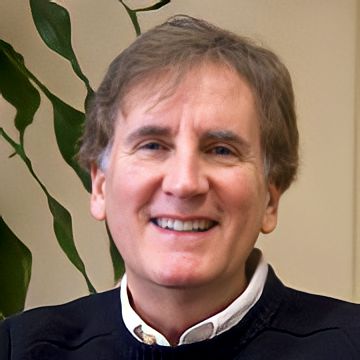

On yesterday's Faith & Finance program on American Family Radio, SMI’s executive editor Mark Biller joined host Rob West to talk about the sharp shift in financial policies that will occur under the new administration.
To listen, click the play button below. Scroll down for the transcript.
Faith & Finance with host Rob West airs weekday mornings on American Family Radio. A different version airs weekday afternoons on Moody Radio.
(More radio appearances by members of the SMI team are posted on our Resources page.)
Transcript
Rob West:
Major changes are likely coming for the U.S. economy. Will you be ready for them?
Hi, I'm Rob West. We have a new president who's pledged to overhaul the economy. How will that affect investors and the markets? Mark Biller joins us today with a plan for managing anticipated disruption.
And then it's onto your calls at 800-525--7000. This is Faith & Finance on American Family Radio — biblical wisdom for your financial decisions. (opening music ends)
Well, our guest again today is Mark Biller, executive editor at Sound Mind Investing, an underwriter of this program. Mark's here to give us some investing insights to guide us through "Trump 2.0."
Mark, great to have you back with us.
Mark Biller:
Well, glad to be here, Rob,
Rob West:
With the inauguration mark of President Trump for his second presidential term happening yesterday, a lot of folks, of course, would like to know what you and your team are thinking about what may lie ahead for investors.
But before we dive into your thoughts about the future, what clues, Mark, can we glean from a quick review of last year?
Mark Biller:
Yeah, that's actually a great place to start, Rob, because SMI has always cast a skeptical eye on trying to forecast the future. One of the benefits of doing this for 35 years is we've seen how poorly most forecasts tend to perform. So instead of forecasting, we try to teach our members how to build robust portfolios that can withstand a wide variety of market conditions.
And a big part of that for us is using trend-following strategies to keep us aligned with what the market's actually doing instead of trying to guess ahead of time how to position our portfolios for what the market might be doing six months from now or 12 months from now. So it's very relevant to start this conversation with what the recent market trends have been. That's usually a much better starting point than a forecast.
So having said all of that, the last two years have been very strong for stocks. In fact, you could make a case, the last two years have been the strongest two-year period ever for the S&P 500. And the past few years have been equally poor for bonds.
Now, starting points really matter in investing, and stocks are already — at today's starting point — as richly valued as they've ever been. So as we look at some of the potential policy changes, the things we're about to discuss, we need to keep that in mind and kind of view them through the framework of "Are these things that are likely to take historically rich stock market valuations and push them even further, even higher? Or are they things that potentially represent catalysts to kind of bring the market valuations back towards a more normal historical level?"
Rob West:
All right. What factors are you watching for the stock market in particular?
Mark Biller:
Yeah, there's an old market saying that "Bull markets don't die of old age." And a lot of times, people will say — they'll add, "They're usually murdered" at the end of that statement!
And the point is that we shouldn't get nervous just because a bull market has lasted a while because most bull markets do end because of a specific catalyst. And usually those catalysts fall into one of two categories — either interest rate hikes or recessions. And we've just watched the Fed cut interest rates three times for a total of 1% in the last quarter [of] 2024. Given that, pivoting to a rate hiking cycle seems really unlikely, even if the Fed has signaled that they probably aren't going to do a lot more cutting. So it's probably safe to take interest rate hikes off of the short-term worry list, at least in terms of killing the bull market in stocks.
Rob West:
If rate hikes are unlikely to end the 2025 bull market, what about a recession? That was obviously front and center a year or two ago. It never materialized what you're thinking there.
Mark Biller:
Yeah, well, the short version, Rob, is it's really hard to have a recession when nominal GDP is growing at 6%. The federal government is running huge deficits. The Fed is already cutting interest rates, unemployment is already really low, and business and personal balance sheets are collectively stronger than they've been in years.
Just to be clear, this is a very strong setup, a strong economy. And given that we're already in a rate-cutting cycle, the odds of a near-term recession seem really low at present.
So that's what I'm talking about when I say as we look at everything today, there's not a lot to be concerned about as far as flipping into a recession, flipping into a bear market. So I hope that I make that really, really clear to people. None of what we're talking about today is meant to be like a bearish forecast or anything like that.
But one of the reasons that we wrote this article that we're talking about today is that while the status quo looks pretty solid for investors right now, president Trump didn't campaign on maintaining the status quo. Quite the opposite. Some of these proposed changes have at least the potential to create turbulence for investors and financial markets down the road. And a big part of that is simply because these markets are currently "priced for perfection."
Rob West:
Let's unpack then the changes you foresee from what you're calling in this article we're referencing today — by the way, you can read it soundmindinvesting.org — "Trump 2.0."
What should investors expect, Mark?
Mark Biller:
Well, given the framework that we just laid out — that the major threats to the market are 1) higher interest rates and 2) recession — that's also the framework that we're using to evaluate these possible policy changes. Are they significant enough to cause a recession, and over what timeframe? And that's really where we think the bear market risk lies out in the future.
Now, it's easy to see why investors and business people are really excited about certain aspects of this Trump 2.0 presidency. That's because things like tax cuts, deregulation, lower energy costs — these are all staples of conservative politics. They're generally good for business, good for markets.
Then again, we shouldn't forget that those policies really were not the primary focus of Trump's campaign. I would summarize one of Trump's main appeals as being that he campaigned as really being the opposite of traditional Wall Street globalist thinking. And basically, his message to voters was he believed that global free trade has gone too far, that it's responsible for a lot of America's problems, and that if he was elected he would work to disrupt and at least reform the global free-trade system.
Rob West:
So how do you think Wall Street then is going to respond if he moves forward with that promise?
Mark Biller:
Well, it seems like Wall Street doesn't really believe he's going to follow through on it, and that's partly because it's such an audacious goal. So during Trump's first term, we were often told that we should "take Trump seriously, but not literally."
In other words, he's always negotiating — trying to make a deal. So if he threatens huge tariffs, it's not that he's actually going to impose them, but rather that's just a negotiating tactic to get what he really wants. And in fairness, there was a lot of that in his first term.
And this is where things get tricky because it sure seems like he's serious about some of these policies this time around. Probably the most important idea we'll discuss today is that U.S. business — and, by extension, the U.S. stock market — has really thrived largely as a result of the global free trade policies of the last 30 years. And so if global free trade is great for U.S. businesses and propelled the U.S. stock market to these highs that we have today, we have to at least consider the idea that scaling back that global free-trade system might have the opposite effect on U.S. stocks.
And that — importantly, Rob, I'm not saying that Trump shouldn't do that, and it's also not to say that that would even be a bad thing for the economy. But we have to remember the economy is not the stock market. And so for example, if we look back at the 1970s, the economy actually ran hot. It was above trend growth of 6% to 9% per year. But it was a really bad period for stocks, largely because they started with really high valuations priced for perfection. And then, over the course of that decade-to-15 years, those valuations decreased back towards normal, and actually went below normal.
So you can have a situation where the economy does just fine from these policies, but the stock market says, "Oooh, this isn't as good for business as we thought."
Rob West:
Mark Biller here today. We're talking "Trump 2.0" — but first let's head to the phones. Carol is in Ohio, waiting patiently. Go right ahead, Carol.
Caller:
Hi. I was just wondering what amount of money I need to save to just get into investing. How much do I need to save to even begin and then what would be my first steps?
Rob West:
Yeah, excellent. So we always talk in terms of making sure you think about the priority order of these buckets of money. So we want to start by having at least a little bit of emergency savings. We usually throw out the number $1,500 as a starting point until you pay off any high-interest consumer debt. So think credit cards now if you're using them for budgeted items, paying it off, I'm not counting that, but if you're carrying a balance month to month, that needs to be the priority.
Once you have that eradicated, or if that's not an issue at all, then we move on to the next priority, which would be three-to-six months living expenses in emergency savings. And we'd like for you to take advantage, alongside that, of any matching you have in a company-sponsored retirement plan because that's free money. We don't want to miss that, but then we can start thinking about investing.
Mark, anything to add to that? And then, secondly, how should she begin just in terms of her own investments?
Mark Biller:
No, I absolutely agree with that. Those are the same priorities that SMI has long taught the "emergency savings" first, and then try to take advantage of a retirement plan, especially if you have matching. And I would say even as we move into, okay, "How do I begin investing in those first steps?" — taking advantage of a retirement plan at work is one of those first steps you want to invest through the most tax-efficient way that you can. For most people starting out, that is going to be their company 401(k) or similar if they have one at work. If they don't have a retirement plan at work, then we start usually looking at setting up an IRA, maybe a Roth IRA, especially if it's a younger person, maybe under 50. I usually would lean towards the Roth IRA as the vehicle to begin investing.
And there are a lot of different approaches as far as "What investments do I buy?" — that sort of thing. But usually, the first question that someone needs to answer is, "What should my mix of investments be?" And usually that boils down to, "How much should I be putting in stocks, how much should I be putting in bonds?" And that is usually going to be a function of the person's age and their risk tolerance.
We have some tools in the "getting started" section of our SMI website that can help people with that, but we also have strategies — and some very simple index fund strategies — that you can get started investing with very little money, less than $1,000 certainly. And then, as you get a little bit more complicated in some of the strategies and what you're trying to do, sometimes you'll run into higher minimums for certain mutual funds and things like that, but you definitely can get started with a very small amount.
Carol, I would encourage you to think about if you've got a retirement plan at work starting there. If you don't, I would maybe go to the Sound Mind investing website and read a couple of our articles about IRAs, the difference between traditional and Roth IRAs, because setting up that account will probably be the big first step. And then you can set up hopefully automated monthly contributions into the IRA and start automating that investment process. That's usually what works best for most people in terms of really making it a regular process that can make a lot of ground and make a lot of investing happen automatically over the years.
So those are my thoughts. Rob, did I miss anything?
Rob West:
No, I think you're exactly right. Hopefully, that'll help Carol sound mind investing.org would be a great place to begin and we appreciate your call today. If we can help further along the way, don't hesitate to reach out.
All right, Mark, crypto! You knew it was coming just in light of what's going on. And by the way, we haven't talked about the Trump mean coin. We're going to have to get to that in a few moments.
But let's go to West Virginia. Hi, Dan.
Caller:
Hello. I was wondering to know — I already have investments in the stock market pension IRAs, and was wondering if this would be a good time to get into crypto?
Rob West:
Yeah, Mark?
Mark Biller:
Well, Dan, Crypto is definitely the deep end of the pool. It is the super high-risk part of the market, and I would make an immediate distinction between bitcoin, which you've probably heard of, and everything else in crypto — and I would be very leery about everything else in crypto. Definitely you need to do a lot of homework before you do anything over on that side of the line because it's very high risk. You can lose a lot of money really quickly.
As far as bitcoin goes, that's a little bit probably less risky — although compared to all of your normal investments, bitcoin is still extremely volatile. It was up 120% last year, so that gives you — stocks and gold, both were up about 25%, and that was a great year for both of those asset classes — so you're talking about a factor of five or six times the risk and potential reward when you step over the line even into bitcoin, which is the more conservative end of crypto.
I think that bitcoin probably, you could make an argument — we could do a whole program on this — that bitcoin is an appropriate extension of how traditional investors have maybe thought about gold. But I would encourage people to start with a very, very, very small allocation to bitcoin — maybe 20% of whatever you would normally put in gold. Take a sliver of that gold piece and put it in bitcoin and start getting comfortable with that risk/return profile before you go any bigger.
Rob West:
Dan, thanks for your call. We'll continue this conversation right after the break. Stay with us.
Rob West:
Just to pick up where we left off, Dan from West Virginia was asking Mark about investing in crypto, and you said what? I separate bitcoin from everything else and for that more speculative portion of your portfolio — and that's probably for a more sophisticated investor — bitcoin could have a place or as a sliver of your gold allocation.
So to the extent we've said 5%, maybe 10%, in precious metals in a properly diversified portfolio, you're saying carve out a portion of that slice and maybe that's where crypto goes. Is that an accurate summary?
Mark Biller:
Yeah, that's where we would position bitcoin and then, for example Rob, in our managed accounts, we don't put our conservative clients in any bitcoin or any crypto at all with if you drew a line down the middle of our more conservative to more aggressive portfolios, the upper half we will take, we usually have a little bit bigger gold allocation than most advisors will this last year. We've run in that 10%-ish range that you're just talking about, and we will still limit the bitcoin portion of those portfolios to usually like one to 3%.
So I'm talking a small amount for more risk-tolerant investors, and if you're doing this on your own and not having someone manage this for you, then I really think the hurdle's even higher because you need to climb the learning curve yourself of what bitcoin is, what it represents, what you're investing in.
Bottom line, Rob, for most investors, I really don't think they need to do anything in this area, but for those who really are into it and want to climb that learning curve, I think there's an appropriate allocation.
Your position sizes in your portfolio have to be connected to the volatility of the asset. And so that's why with bonds, low volatility, so we can have a high allocation to that without worrying about it. Bitcoin's the opposite, super-high volatility. So we need to correct for that by having low allocations to it because a small amount of bitcoin, if it moves a whole lot, you're going to get a much bigger impact because of that volatility. Does that make sense?
Rob West:
It sure does, yeah. Mark, though, what about those that say— specifically related to bitcoin for this more sophisticated group of investors — "Wait a minute. I mean there's nothing backing it." And to the extent you could say, "Well, there's nothing backing the fiat currency — well, except for the central bank and we don't have one of those here."
So how do we even think about it, especially given just its wild fluctuations in terms of it being a legitimate investment?
Mark Biller:
Yeah, like I was saying earlier, Rob, we could do a whole program breaking that down, but I think that a big part of it is that bitcoin at this point, because of the hard money application of it and the aspects of it with the limited amount and the contrast of bitcoin being a fixed volume of bitcoins that'll ever be created, you have that hard money argument that people have always made with gold. And so that's why I say that I'm more comfortable with gold, frankly.
But part of it is a little bit of a generational argument as well, where younger people tend to be more inclined towards bitcoin if they're into this hard-money-versus-fiat — versus governments depreciating the currencies. They look to things like gold, which has been the traditional thing to combat governments, debasing currencies, and bitcoin has come into that conversation as an alternative to gold.
So what you tend to see is older investors favor gold. Younger investors favor bitcoin for that specific "anti-government, debasing my currency" purpose within a portfolio. And so I think that that's where you come into the argument. And that's where I'm saying, Rob, if you're doing this on your own, you really have to do the homework on this exact question to answer for yourself. Is that a compelling enough argument for me to include even a tiny piece in my portfolio?
And that's not an easy thing. It takes most people a lot of work to kind of figure that out. So that's kind of where I'm coming from though it really serves that hard money.
I don't want to say "anti-government," but it is combating what we're all concerned about, which is governments debasing our dollars and global currencies, and you can go to gold as an alternative to that. Or, increasingly more people are including bitcoin in that gold/bitcoin alternative bucket.
Rob West:
Yeah. Very good. Dan, thanks for your call today. We appreciate you being on the program from West Virginia there.
Mark, we were talking early in the broadcast about the implications of some of Trump's policies. One of those is this idea of bringing more manufacturing back to the U.S., and you were very clear that may be a great idea for the economy, but that doesn't necessarily mean it will bode well for the stock market. Your thoughts?
Mark Biller:
Yeah, I think what it really boils down to, Rob, is why did U.S. businesses outsource manufacturing in the first place? And the main reason is they can make things cheaper overseas, mainly because labor costs are so much lower. And so if we reverse that, if these companies are pushed by tariffs and other policies to bring that back to the U.S., the bottom line is it's going to cost more to produce these things and higher costs for these businesses mean lower profits potentially.
Again, starting points matter a lot, and with the stock market today being as expensive as it's ever been, you start looking at those marginal costs, lower profits potentially, and wondering if that would have an impact on how much investors are willing to pay for these stocks.
Now, really important, a lot of companies don't really manufacture things as their primary business, so it's not like this is going to apply equally across the board.
One of the main points I want to leave with people today, Rob, is just that markets are priced for perfection today and that includes a lack of volatility. And it seems to me that if you look at President Trump's proposed policies, one thing you would not conclude is that it's likely to be a low-volatility mix. He's bringing the volatility. He didn't get elected to leave things the way they are. He wants to make big changes. And so we just really need to pay attention as these changes are made and as these policies are articulated and we see what's being implemented, how quickly and so forth that we keep an eye on the impact on some of these trends.
Rob West:
Yeah, that's really helpful. Well, let's talk about a few others. Let's talk DOGE for a second — the Department of Government Efficiency. We've been hearing about a lot about that — it was front and center even yesterday, in his multiple speeches [Trump] gave, and we even heard from Elon Musk yesterday. Apparently he's going to have an office somewhere near the president in that complex.
Is this on the positive side of the ledger in your mind?
Mark Biller:
It's a tough one, Rob. I would say to me, this is a lot like somebody [who hasn't excercised] for 20 years and has woken up and realized, "I really got to change my ways because I'm overweight. I'm out of starting." Exercise is a fantastic decision, but that doesn't mean that that's going to be pleasant initially. In fact, the first month, the first six months, probably [are] going to be kind rough, even though this is the right thing to do. "We need to do this."
And that's kind of how I look at DOGE. We've got to get government spending under control. We've got to address these ridiculous deficits that we've been running the last several years. But it is like the proverbial "eat or vegetables, they're good for you." In the long run, you better eat 'em. We better do this. But it could be tough in the short term.
And the reason I say that is just that today's government spending is part of today's economic growth — that government spending is largely jobs for people who are then making money and outspending that money. So as we cut that back, which we need to do, I don't think it's a crazy idea that that would include some short-term pain. And, in fact, Elon has been asked point blank that very thing, and he's basically agreed, yes, this is probably going to cause some short-term pain.
So this is a great example of the things — when I'm talking about how are these things rolled out, how quickly are they rolled out? If we come out of the gate and we do a whole bunch of government-cutting before we've done some of the other things to get the economy rolling a little bit faster, well, that could be a problem. On the other hand, if we do some of the other things and really get the economy strong and healthy and running really well and then we're cutting into that, we could get a different outcome. So a lot of it will be in the details of how they implement this.
Rob West:
Yeah, that's helpful. Let's focus for a second on a few of those things that we think will boost the economy. Two of them go really closely, hand in hand. One is deregulation, the other energy production — both of which [Trump] mentioned yesterday, first day on the job. Your thoughts?
Mark Biller:
Yeah, I think the economic argument for deregulation is really clear. It boosts productivity, it clears the red tape. It's generally great for business, great for investors.
And the most obvious low-hanging fruit in the deregulation area probably does relate to the energy sector. This is a really important part of the whole Trump calculation of his policies. And I say that because energy prices are such a key input into so many consumer prices that if they can get some wins here and get some relief on energy prices, that'll go a long way to offset some of the inflationary pressures that we might see from things like immigration reform, the tariffs and so forth. Those things are likely to be net inflationary. So we really need this deflationary impulse, hopefully from lower energy prices and deregulation.
Rob West:
And I assume, Mark, tax cuts would likely be bullish for investors as well, right?
Mark Biller:
Yeah, they almost always are. The only caveat there is the big one is the extension of Trump's tax cuts from his first term. You're probably not going to get the same boost from simply renewing the status quo — the tax cuts that are already in place — as we did when he made those the first time.
When you make new tax cuts, those are stimulative because people have more money than they did before. To renew those tax cuts, you're just kind of extending the way things are right now.
But there are some new potential tax cuts on the table as well. We've heard proposals about tip income, Social Security income, [and] lowering corporate tax rates. So all of those new cuts could definitely be stimulative and beneficial.
Rob West:
Well, if I was 14 and starting a lawn company, I'd probably just say "tips only." (chuckle)
Mark Biller:
Right? That would be smart. Good idea!
Rob West:
All right, Mark, we're about out of time. Sum this up for us.
Mark Biller:
Yeah, Rob, the big picture: there are way too many moving pieces to really predict what the cumulative impact is going to be on the economy or the markets. I'm optimistic that these policies will cause the U.S. economy to do really well.
But along with that, we have to keep an eye on inflation because economic growth and inflation often run hand in hand. So seeing how those play together will be one of the things over the next few years that'll be really interesting.
And right now, markets aren't priced for a resurgence in inflation. So that's one of the big things we'll be watching — all of this bears watching. But that's what we do at SMI. So if people want to keep an eye on these factors along with us, we'd invite 'em to come over and follow our writing over there and see how this unfolds.
Rob West:
Absolutely. Well said, Mark. Hey, thanks for stopping by, my friend.
Mark Biller:
Always my pleasure, Rob.
Rob West:
He's Mark Biller, executive editor at Sound Mind Investing. You can read a lot more about today's topic, Trump 2.0: Using Objective Investing Models to Guide us Through Anticipated Disruption at soundmindinvesting.org.