
On July 4, 1788, less than two weeks after the ratification of the U.S. Constitution, Americans celebrated with a "Federal Procession" through the streets of Philadelphia.
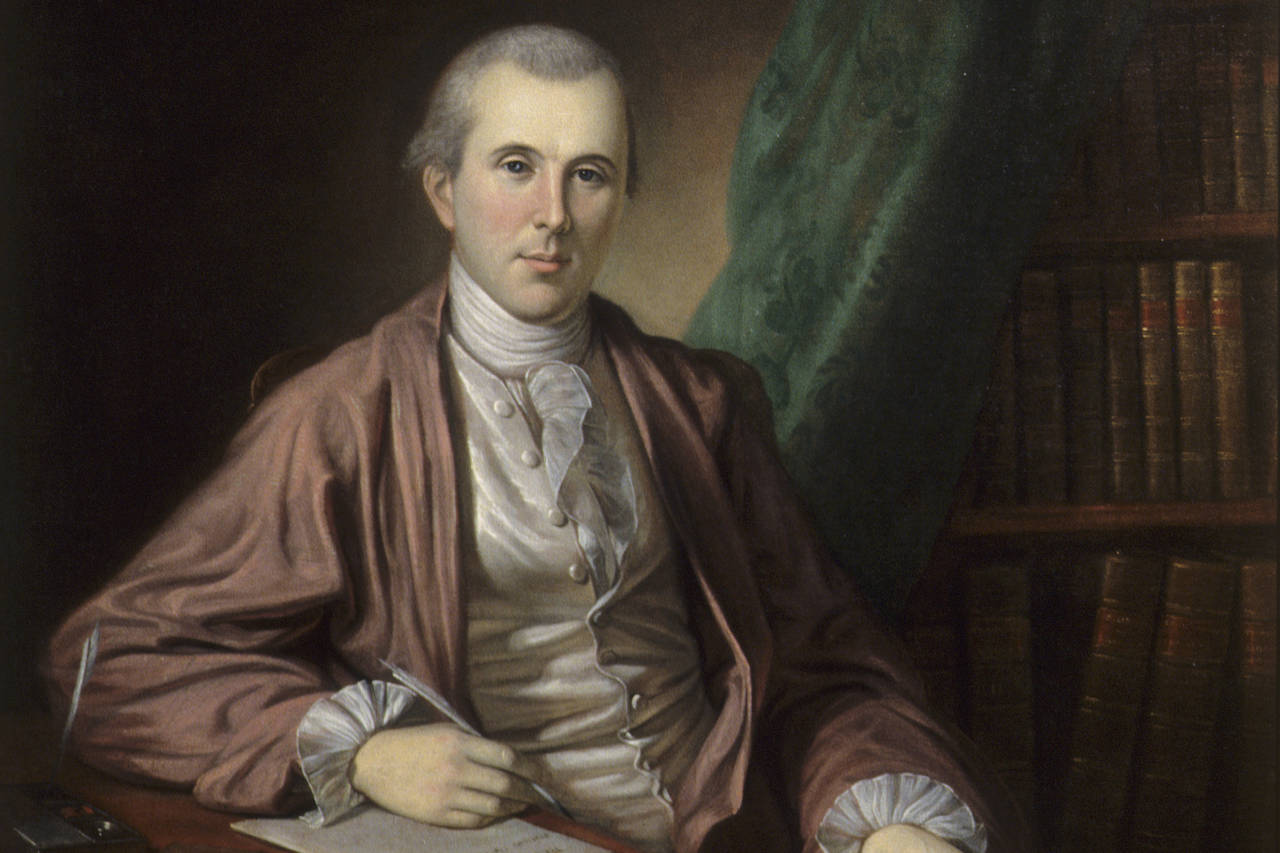
Founding Father Benjamin Rush, a signer of the 1776 Declaration of Independence, was an eyewitness to the celebration. (Rush was a medical doctor in Philadephia and is commonly referred to as the "Father of American Medicine.")
Dr. Benjamin Rush described the procession in a letter to his friend, Elias Boudinot (who later served as the director of the U.S. Mint).
Philadelphia
9th July, 1788My dear Friend,
The first thing that struck me in viewing the procession [in honor of the establishment of the Federal Government] was the occasion of it.
It was not to celebrate a victory obtained in blood over any part of our fellow creatures. No city reduced to ashes — no army conquered by capitulation — no news of slaughtered thousands brought the citizens of Philadelphia together.... It was to celebrate the birth of a free government, the objects of which were to lessen the number of widows and orphans by preventing the effusion of human blood, to save human nature from the disgraces and desolations of war, and to establish and extend the blessings of peace throughout the continent of America....
It was very remarkable that every countenance wore an air of dignity as well as pleasure. Every tradesman’s boy in the procession seemed to consider himself as a principal in the business. Rank for a while forgot all its claims, and Agriculture, Commerce, and Manufactures, together with the learned and mechanical Professions, seemed to acknowledge by their harmony and respect for each other that they were all necessary to each other and all useful in cultivated society....
I need not suggest to you how much this mixture of the mechanical and learned professions in a public exhibition is calculated to render trades of all kinds respectable in our country. Farmers and tradesmen are the pillars of national happiness and prosperity....
The Clergy formed a very agreeable part of the procession. They manifested by their attendance their sense of the connection between religion and good government. They amounted to seventeen in number. Four and five of them marched arm in arm with each other to exemplify the Union. Pains were taken to connect ministers of the most dissimilar religious principles together, thereby to show the influence of a free government in promoting Christian charity....
It would be ungrateful not to observe that there have been...signs, in the course of the formation and establishment of this government, of heaven having favored [us]. The union of...[multiple] states in the adoption of the Constitution in less than ten months, under the influence of local prejudices, opposite interests, popular arts, and even the threats of bold and desperate men, is a solitary event in the history of mankind.
I do not believe that the Constitution was the offspring of inspiration, but I am as perfectly satisfied that the Union of the States, in its form and adoption, is as much the work of a Divine Providence as any of the miracles recorded in the Old and New Testament were the effects of a divine power.
’Tis done! We have become a nation.
(From The Letters Of Benjamin Rush, Volume I, published for The American Philosophical Society by Princeton University Press, 1951.)