

For the first time, the U.S. government has spent more than $1 trillion on interest in a fiscal year — $1,048,589,000,000. With a few weeks still remaining in FY 2024, end-of-August figures released by the Treasury Department show interest costs are up more than 30% over a year ago.
The jump in debt service costs came as the U.S. budget deficit surged in August, edging closer to $2 trillion for the full year.
With one month left in the federal government’s fiscal year, the August shortfall popped by $380 billion, a dramatic reversal from the $89 billion surplus for the same month a year prior that was due largely to accounting maneuvers involving student debt forgiveness.
That took the 2024 deficit to just shy of $1.9 trillion, or a 24% increase from the same point a year ago.
The mind-boggling deficit ($1,897,078,997,942) isn't due to a decline in tax revenues. As the Treasury Department notes here, federal revenue increased by $419 billion compared to this same point in the previous fiscal year. That's a substantial 11% increase in money coming into the Treasury.
But here is the spending side of the equation:
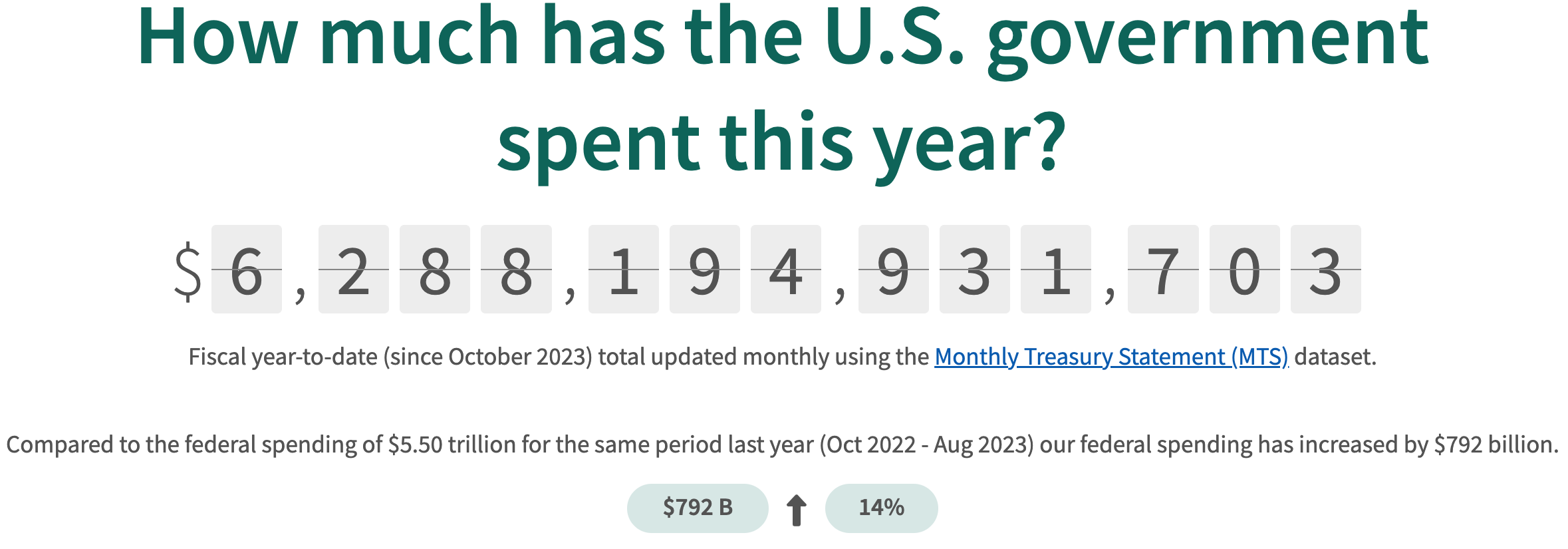
So, while revenues are up 11%, spending has risen by 14%.
Runaway interest puts pressure on the Fed
The U.S. government primarily funds its overspending by selling Treasury bills and bonds to domestic and international investors. For nearly a decade, super-low interest rates kept the annual cost of servicing that debt below $350 billion, even as the government's overall debt grew. But now, between ramped-up spending and higher rates, interest costs have skyrocketed.
While most news/commentary about the Fed's likely move to cut interest rates this week will focus on labor markets and consumer activity, Fed Chairman Jerome Powell undoubtedly is also thinking about Washington's runaway interest payments, which are now more than three times greater than just a few years ago.
An uneasy situation
Remarkably, the market for U.S. debt has remained steady, as most investors seem unbothered by the sharp run-up in debt and interest costs. However, a recent analysis by three economists at European financial firm ING warned that the prevailing attitude of indifference could change — and perhaps quickly.
[A] lack of market concern about the size of the deficit can easily pivot to it being top of the list of worries. The transmission mechanism here is a few poor bond auctions [as investors demand higher rates in return for perceived higher risk, leading to] structurally higher absolute yields. That could happen slowly, or it could be more abrupt....
In the current environment, where markets are calm, politicians see little threat from the current trajectory of the US's fiscal position. But that will quickly change if ratings agencies and markets start to see it as an issue. If markets become dysfunctional, it will force governments to take more rapid and painful action.
Remember, however, that when Moody's downgraded Uncle Sam's credit rating from "stable" to "negative" late last year, it didn't move markets much. And perhaps overall rates trending lower will stave off any further downgrade, thus giving a little more breathing room for — well, who knows?
A dangerous game
Those of us who lived through the 1980s and '90s remember that federal debt and spending issues used to get a lot more attention than they do now. (Remember the Gramm–Rudman–Hollings Balanced Budget and Emergency Deficit Control Act of 1985? How about the almost successful attempt to pass a Balanced Budget Amendment in 1995?)
Today's relative indifference among many policymakers and economists stems from the increasingly common view that the size of the federal debt doesn't matter. After all, deficits can be funded by selling more debt (Treasury) and creating more money (Fed), so why worry?
Perhaps the what-does-it-matter argument will continue to hold sway and seem correct indefinitely. Maybe the market for U.S. debt will stay steady, inflation will be tamped down, and all will be well. However, as the ING economists warn above, no one knows. It's a dangerous game.
A new Fed rate-cutting cycle won't solve the interest-growth problem, but it will help. After all, when you're overspending by hundreds of billions of dollars, even a slight rate reduction, as it filters through the bond markets, can make a vast dollars-and-cents difference!
Ultimately, however, Congress and the White House must act, as Fed Chairman Powell stressed in an interview earlier this year. "It's probably time, or past time, to get back to an adult conversation among elected officials about getting the federal government back on a sustainable fiscal path." Yeah, probably.